Scope: This is general operating guidance. Follow your local health department and adopted code, facility SOP (standard operating procedure), chemical label, and equipment-manufacturer instructions.
The Four-Parameter Core
Free chlorine, combined chlorine, pH, and total alkalinity form a useful core chemistry panel because together they describe disinfectant residual, reacted chlorine, acid/base condition, and buffering. A team watching these four values on a schedule can explain most of what the water is doing.
They do not replace every parameter a jurisdiction may require. Local adopted code decides the mandatory list and its testing frequency, and the core panel is the operating baseline underneath those requirements rather than a substitute for them.
Free Chlorine
Free chlorine is the available disinfectant residual measured as a concentration. It is the value inspectors ask for first, the value bathers' safety depends on most directly, and the value that bather load, sunlight, and contamination spend all day.
Required operating ranges vary by jurisdiction and facility conditions, so publish no universal compliance number without location-specific sourcing. The 2024 Model Aquatic Health Code lists a minimum free chlorine of 1 ppm as a reference value, and local adopted code sets the actual requirement. When free chlorine misbehaves, the guides to free chlorine that keeps dropping and pools that will not hold chlorine cover the diagnostic patterns. For the portfolio-wide picture of scheduled testing, alerts, and records, see our guide to commercial pool monitoring.
Combined Chlorine
Combined chlorine adds information about chlorine that has reacted with nitrogen-containing compounds. It can reveal recurring bather-load or treatment patterns that are invisible if the log records only free chlorine.
Because combined chlorine is usually calculated as total chlorine minus free chlorine, it rewards careful testing and punishes sloppy technique twice. The 2024 MAHC lists a combined-chlorine action concentration above 0.4 ppm as a reference value. For the deeper dives, see what combined chlorine is, what causes it to run high, and how to lower it.
pH
pH affects swimmer comfort, equipment conditions, and chlorine chemistry. It can move because of chemical feed, source water, aeration, carbon dioxide loss, and buffering, which is why a pH reading without context is only half a story.
The 2024 MAHC lists a reference pH range of 7.0 to 7.8 for public pools, with local code setting the actual operating range. Persistent movement in either direction has its own playbook: pH that keeps rising and pH that keeps dropping cover the recurring drivers.
Total Alkalinity
Total alkalinity describes buffering capacity and helps explain pH behavior. A stable pH with low alkalinity and a stable pH with high alkalinity are not chemically identical situations; the first is a calm pool, the second is a lucky one.
The 2024 MAHC lists a reference total alkalinity range of 60 to 180 ppm. The pH vs. alkalinity relationship explains how the two values interact, and the high alkalinity and low alkalinity guides cover each direction of trouble.
Testing Methods
Manual reagent kits, photometers, electrochemical probes, and automated reagent systems each have different strengths. Compare what they actually measure, how often, and what maintenance keeps the result trustworthy.
The method question matters more than the brand question. A probe produces continuous readings that need calibration and cleaning to stay honest; a reagent test produces a discrete chemistry result tied to the moment it ran. Probes vs. reagent testing and the guide to automatic pool water testing map the tradeoffs, and why pool probes drift explains the maintenance reality behind continuous sensing.
ORP and Direct Chlorine Are Different
ORP measures oxidation-reduction potential in millivolts. It can be useful for control and trend information, but it is not a direct free-chlorine ppm result and does not directly report combined chlorine.
The distinction matters at inspection time and at diagnosis time: an ORP number cannot stand in for a free-chlorine concentration, and a pool can show a comfortable ORP while the ppm story is more complicated. ORP vs. free chlorine details what each measurement can and cannot say.
From Detection to Correction
A strong program links each out-of-range result to confirmation, diagnosis, approved corrective action, retesting, and documentation. The chain matters more than any single link: an unconfirmed reading wastes chemicals, an undocumented correction teaches nothing, and an unverified fix may not be a fix.
Monitoring is valuable because it shortens the time between a chemistry change and human awareness. The correction itself still belongs to trained people working the facility procedure, and the technology's job is to put the right information in their hands early.
Logs and Historical Trends
History reveals rate, timing, and recurrence. A single low chlorine test says "low now"; a week of timestamped tests can show that the decline starts after the same event every afternoon.
Trends are what separate diagnosis from guessing. Rate of change, time of day, and relationship to programming or equipment events are all invisible in single readings and obvious in a plotted week. The commercial pool logs guide covers what a useful record captures.
Remote and Multi-Property Oversight
Regional teams need exception visibility across many pools. A shared dashboard can prioritize which property needs attention while local staff handle physical inspection and correction.
The oversight model works when the data is trustworthy and the responsibilities stay clear: the dashboard surfaces the exception, the local operator verifies and corrects it, and the supervisor confirms the loop closed. Chemistry is physical, so the last mile of every alert is still a person at the water.
Practical Operator Workflow
Give every parameter an owner and every excursion a path. The team should know who confirms a surprising reading, who can approve a correction, who checks equipment, and who closes the loop with the follow-up test. Written once and trained across sites, that path is what makes a regional portfolio behave like one well-run pool instead of twelve improvisations.
What Good Operations Look Like
A well-run chemistry program makes the water legible. The four core parameters are tested on a schedule, the results land in one history, and each excursion travels the same path: confirm, diagnose, correct under procedure, retest, document. Supervisors read trends instead of anecdotes, and the equipment room gets investigated from data rather than hunches. The chemistry still changes every day. The difference is that the team is never the last to know.
Where Amano Fits
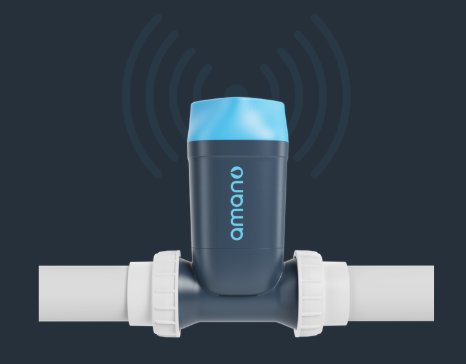
Amano automates the four-parameter core: scheduled reagent-based tests measuring free chlorine, combined chlorine, pH, and total alkalinity for commercial pools. Every result is timestamped, alerts go out after completed tests, and logs can be shared by QR code without an Amano login.
The four-parameter core of this guide is exactly the panel Amano tests on schedule. The practical value is density plus history: more observations per week than manual testing alone, each one timestamped and stored, with completed tests reviewable across multiple properties in one app. Patterns that take a month to notice on paper show up in days on a timestamped trend.
Amano supports the operator's process. It does not add chemicals, and it does not replace testing, verification, or safety duties imposed by the local authority having jurisdiction.
Automate the core chemistry panel
See how scheduled reagent tests cover free chlorine, combined chlorine, pH, and total alkalinity on your pools.
See How Amano Automates Pool Chemistry Testing Request a Demo
Quick FAQ
What chemistry should commercial pools monitor?
Core operational panels commonly include free chlorine, combined chlorine, pH, and total alkalinity, while other required parameters depend on the facility type and jurisdiction. Local adopted code defines the mandatory list.
Is ORP the same as free chlorine?
No. ORP measures oxidation-reduction potential in millivolts, not free-chlorine ppm. It can support control decisions, but it cannot report a disinfectant concentration or a combined-chlorine level.
Does automation replace manual testing?
Do not assume so. Required manual tests and inspections are determined by local rules and facility procedures. Automation adds observations and history; the operating program decides how the pieces fit.
Why keep history?
Trends help teams see recurring chemistry behavior, document responses, and separate one-time events from processes that need an owner. A single test tells you the water now; a timestamped series tells you what the water does.
Talk through your pools with us
Thirty minutes, your properties, your water-testing setup. No obligation.
Primary sources and scope
Reviewed September 16, 2026. The sources below provide public-health and label context. Amano product details on this page come from current Amano materials.