Scope: This is general operating guidance. Follow your local health department and adopted code, facility SOP (standard operating procedure), chemical label, and equipment-manufacturer instructions.
What Is Probe Drift?
Probe drift is the gradual change in a sensor’s output relative to the reference or condition it is intended to measure. In practical terms, the displayed value can move even when the underlying water condition has not changed by the same amount.
Drift is one reason electrochemical sensors require a maintenance and verification program, and it is one of the core maintenance challenges in probe-based commercial pool monitoring.
- Sensor in the water
- Fouling and aging
- Readings drift
- Verify against a trusted test
- Clean and calibrate
- Replace when needed
Why Pool Probes Change Over Time
pH and ORP electrodes operate at the interface between a sensitive measurement surface and pool water. Over time, fouling, deposits, aging, reference-electrode changes, contamination, storage conditions, installation conditions, and normal sensor wear can affect performance.
The specific causes and maintenance steps depend on the sensor manufacturer, so operators should follow the product documentation rather than applying a generic procedure to every probe.
Fouling and Deposits
Pool water can leave scale, oils, biofilm, or other material on sensor surfaces. A coated sensing surface may respond more slowly or differently than a clean one.
Cleaning can help when fouling is the cause, but aggressive or incorrect cleaning can damage a sensor. Use the manufacturer’s procedure.
Calibration and Verification
Calibration compares a sensor response with a known reference and adjusts the measurement system when appropriate. Verification checks whether the reading is believable against a trusted reference or independent test.
A calibration schedule should come from the equipment manufacturer and the operating environment, not from a universal internet rule.
Signs a Probe May Need Attention
Possible warning signs include readings that disagree with trusted manual tests, unusually slow response, repeated calibration failures, unstable values, implausible jumps, or a sensor that cannot hold calibration.
None of these symptoms proves “drift” by itself. Flow, installation, wiring, controller settings, sample conditions, and real chemistry changes should also be investigated.
Why Drift Is Harder Across Many Properties
At one pool, a skilled operator may know the sensor’s history. Across dozens of properties, management must track calibration dates, cleaning, replacements, manual comparisons, and which technician serviced which sensor.
That creates an operational burden beyond the cost of the probe itself.
ORP Adds Another Interpretation Layer
An ORP probe can be functioning correctly while the operator still misinterprets the number as a free-chlorine ppm value. ORP responds to the water’s oxidation-reduction environment, so chemistry changes can alter ORP even when the sensor itself is healthy.
Before blaming drift, understand what the probe actually measures.
What Commercial Operators Can Do
Create a documented sensor-maintenance process. Follow manufacturer cleaning and calibration instructions. Compare readings with appropriate independent tests. Record service dates. Investigate unexpected changes rather than automatically adjusting chemicals based on one questionable number. Replace sensors when they no longer meet the manufacturer’s performance expectations.
An Alternative Measurement Model
Automatic reagent testing avoids routine calibration of immersed chemistry probes for the parameters it tests because it performs a fresh reagent reaction each cycle. That removes one maintenance category but introduces another: reagents and the testing mechanism still need maintenance.
The question is not whether maintenance disappears. It is which maintenance model better fits the operation. See probes vs. automatic reagent testing for the full comparison.
Where Amano Fits
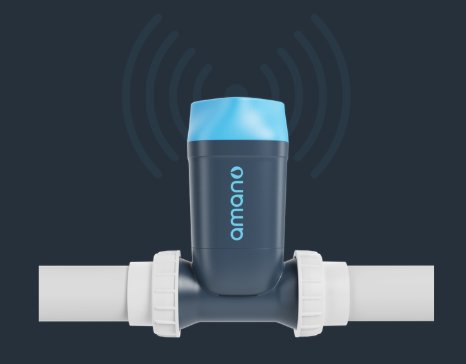
Amano’s four core chemistry tests - free chlorine, combined chlorine, pH, and total alkalinity - use liquid reagents rather than immersed chemistry probes. As a result, those tests do not depend on routine calibration of pH/ORP chemistry probes.
Amano still requires periodic reagent replacement and normal device maintenance. It should not be marketed as maintenance-free.
A different maintenance model
See how Amano’s scheduled reagent tests avoid routine chemistry-probe calibration for free chlorine, combined chlorine, pH, and total alkalinity.
Compare Probe Monitoring With Reagent Testing Request a Demo
Pool Probe Drift FAQ
Do all pool probes drift?
Electrochemical sensors can change over time and require maintenance/verification according to the manufacturer.
How often should probes be calibrated?
Follow the specific manufacturer's instructions and facility operating conditions.
Does a bad reading always mean a bad probe?
No. Real chemistry changes, flow, installation, controller settings, fouling, and other factors can cause unexpected readings.
Does reagent testing eliminate all maintenance?
No. It changes the maintenance model.
Talk through your pools with us
Thirty minutes, your properties, your water-testing setup. No obligation.
Primary sources and scope
Reviewed September 16, 2026. The sources below provide public-health and label context. Amano product details on this page come from current Amano materials.