Scope: This is general operating guidance. Follow your local health department and adopted code, facility SOP (standard operating procedure), chemical label, and equipment-manufacturer instructions.
What Is Automatic Pool Water Testing?
Automatic pool water testing is the use of installed equipment to perform water-quality measurements or chemical tests without requiring a person to manually collect and test every sample. In commercial pools, the term can describe very different technologies, so operators should look beyond the word “automatic” and ask what the system actually does.
Some systems continuously read sensors. Some perform scheduled reagent tests. Some controllers use sensor inputs to control chemical feed. Automatic testing and automatic chemical dosing are not the same function.
Automatic testing sits inside the broader practice of commercial pool monitoring: collecting useful water information often enough to act on it.
Why Automate Pool Water Testing?
Manual water testing is essential, but it consumes labor and only captures conditions at the time the sample is taken. Automation can add scheduled or continuous visibility between physical tests.
The goal is not to eliminate the operator. It is to reduce blind spots, create a reliable history, identify changes sooner, and help staff arrive at the pool with more information.
For the full picture of methods and requirements, see our guide to commercial pool water testing.
Three Different Meanings of 'Automatic'
The phrase can refer to automatic sensing, automatic reagent testing, or automatic chemical control.
Automatic sensing uses probes or sensors to generate readings. Automatic reagent testing takes a sample and performs a chemical test. Automatic chemical control uses measurements to adjust feeders or dosing equipment. A product may perform one, two, or all three functions. Buyers should not assume they are interchangeable.
What Should an Automatic Tester Measure?
For routine commercial-pool chemistry, free chlorine and pH are central measurements. Combined chlorine and total alkalinity provide additional operational context. Other parameters such as temperature, calcium hardness, flow, and equipment status may be relevant depending on the facility and system.
A system that says it measures “chlorine” should explain whether that means free chlorine concentration, ORP, total chlorine, or another value.
Scheduled Tests vs. Continuous Readings
Continuous readings sound inherently superior, but frequency is only one dimension of measurement quality. Operators also need to consider what is being measured, how the measurement is validated, and what maintenance is required.
A continuous ORP signal is useful for control and trend information, but it is not the same as a direct free-chlorine ppm result. A scheduled reagent test may provide a direct chemistry value but not second-by-second data. The right approach depends on the operational goal.
How Automatic Reagent Testing Works
An automatic reagent tester draws or receives a water sample, adds a chemical reagent, measures the resulting reaction, calculates the value, records it, and prepares for the next scheduled test.
The important operational distinction is that each test is a fresh chemical reaction rather than a continuous reading from an immersed chemistry probe. Maintenance therefore centers on reagent supply, fluid paths, and the device’s testing mechanism rather than routine calibration of those immersed chemistry probes (see why pool probes drift and how calibration schedules work).
- Draw water sample
- Add reagent
- Measure reaction
- Calculate value
- Record result
- Prepare next test
For a side-by-side look at the two automation models, see probes vs. automatic reagent testing.
What Automation Cannot See
A water-testing device cannot replace physical observation. It does not inspect the deck, verify signage, hear abnormal equipment noise, see a broken drain cover, or evaluate every safety condition.
Commercial operators should combine automated information with trained people, physical inspection, required manual tests, and the applicable local code.
Automatic Logs
One of the strongest benefits of automatic testing is automatic documentation. A test can become a timestamped record without requiring a second manual step to write the result on paper.
This can make trend review and multi-property oversight easier, but automated records should not be represented as replacing legally required manual logs unless the applicable authority accepts them for that purpose.
Where Amano Fits
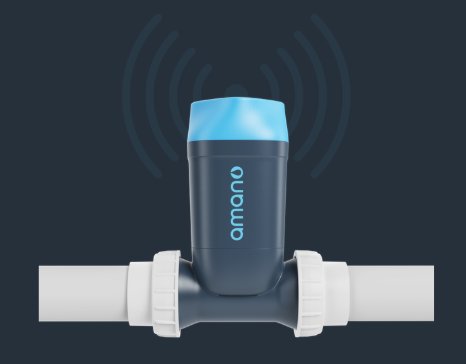
Amano is an inline liquid-reagent tester for commercial pools. It automatically tests free chlorine, combined chlorine, pH, and total alkalinity on a schedule. Current Amano materials describe typical testing twice per day with adjustable timing and frequency.
Results are transmitted over built-in cellular connectivity and stored as timestamped digital chemistry records. Amano does not automatically dose chemicals. Its role is testing, monitoring, logging, alerting, and helping teams understand the result.
See automatic reagent testing on your pools
See how scheduled reagent tests, cellular reporting, and timestamped logs fit your properties.
Questions to Ask Before Buying
Ask: Does it directly test the parameter I care about? Is the result continuous or scheduled? What calibration is required? What consumables are required? How does it connect? Can results be shared? Can multiple pools be managed together? Does the system dose chemicals or only report chemistry? What manual testing is still required by my jurisdiction?
These questions separate useful operational capabilities from broad marketing language.
Automatic Pool Water Testing FAQ
Is automatic pool water testing the same as a chemical controller?
No. A tester measures water; a controller may use measurements to control chemical feed.
Does automatic testing eliminate manual testing?
Do not assume so. Follow the applicable code and authority having jurisdiction.
Can automatic testing measure free chlorine?
Some technologies can. Verify the measurement method and parameter.
Does Amano use probes?
Amano's four core chemistry tests use liquid reagents rather than immersed chemistry probes.
Talk through your pools with us
Thirty minutes, your properties, your water-testing setup. No obligation.
Primary sources and scope
Reviewed September 16, 2026. The sources below provide public-health and label context. Amano product details on this page come from current Amano materials.