Scope: This is general operating guidance. Follow your local health department and adopted code, facility SOP (standard operating procedure), chemical label, and equipment-manufacturer instructions.
Two Ways to Automate Water Information
A sensor continuously or frequently reads a physical or electrochemical property. A reagent tester takes a sample and performs a chemical reaction on a schedule. That difference affects what is measured, how often, and what maintenance keeps the result trustworthy.
Start the buying process by writing the decision the data must support. 'Control sanitizer feed continuously' and 'give a regional manager direct chemistry readings twice a day' are different jobs and may justify different technologies.
What Pool Sensors Do Well
PH and ORP probes can provide frequent or continuous readings. That is valuable for trend visibility and especially valuable when a chemical controller needs a responsive input for feed decisions.
Sensors can show minute-to-minute movement that a scheduled reagent test will not capture. For control applications, that frequency can be the entire point.
Continuous signals are also useful for seeing short-lived events that scheduled testing might miss. The tradeoff is that the sensor must remain clean, calibrated or verified as required, and properly installed. For the portfolio-wide picture of scheduled testing, alerts, and records, see our guide to commercial pool monitoring.
What Reagent Testing Does Well
A reagent system can perform a fresh chemical test each cycle. Depending on the device, that can provide direct concentration results for parameters that are not represented by a simple ORP signal.
For commercial operators, this can be useful when the goal is periodic direct chemistry values, automatic records, and remote oversight rather than second-by-second control.
Because each test consumes reagent and takes a cycle, reagent systems usually optimize around useful scheduled frequency rather than maximum frequency. That can be perfectly appropriate when the operating question does not require second-by-second control.
ORP Is a Good Example of the Difference
An ORP probe measures oxidation-reduction potential in millivolts. Chlorine influences ORP, but ORP is not a direct free-chlorine ppm measurement.
A reagent chlorine test can be designed to report a chlorine concentration. Neither measurement is automatically “better”; they provide different information.
This distinction is important in sales language. Calling an ORP probe a 'chlorine sensor' without qualification can cause buyers to think it reports chlorine ppm. Technical precision builds more trust than simplifying the measurement past recognition.
Frequency vs. Specificity
Continuous data sounds superior until you ask what the data represents. Scheduled data sounds sparse until you ask whether each test directly measures the parameter you need.
A smart evaluation considers both dimensions. A controller may need continuous pH/ORP input, while a regional manager may value scheduled free-chlorine, combined-chlorine, pH, and alkalinity results with a clean history.
Some operations may intentionally use both: high-frequency control data plus lower-frequency direct chemistry tests. The architecture should be judged by whether it gives the right people the right information at the right time.
Maintenance Models
Sensors require sensor maintenance: cleaning, verification, calibration where applicable, troubleshooting, and eventual replacement. Reagent systems require consumable reagents plus maintenance of pumps, tubing, sample paths, optics or other detection components depending on design.
There is no maintenance-free chemistry. There are simply different maintenance models.
Compare annual maintenance tasks explicitly. List calibration, cleaning, reference solutions, probe replacement, reagent cartridges, tubing or pump service, and technician time. The boring maintenance table is often more valuable than the glamorous feature table.
Failure Modes Are Different
A probe can foul, drift, age, lose calibration, or suffer wiring/flow problems. A reagent system can run low on reagent, develop sampling problems, experience fluid-path issues, or have detection/mechanical faults.
Buyers should ask how the system detects its own failures and how a technician confirms that a surprising result is real.
Ask vendors how the system detects an invalid test, empty reagent, loss of sample flow, sensor failure, or communication outage. A trustworthy monitor should help the operator recognize when the monitor itself needs attention.
Can the Two Technologies Work Together?
Yes. A pool can use pH/ORP sensors for continuous chemical control and a separate reagent tester for scheduled direct chemistry observations. The technologies do not have to fight for custody of the equipment room.
The right architecture depends on what the facility already has and what information gap it is trying to close.
Integration does not have to mean electronic integration. Even when two systems do not share an API, operators can use the direct chemistry history to validate and contextualize the controller's behavior.
What to Ask a Vendor
Ask what each parameter actually represents, how often it is measured, how the system validates itself, what consumables are required, what parts wear out, how data is transmitted, whether it controls chemicals, and what the operator must still do manually.
If the answer to “what does it measure?” begins with a five-minute detour through marketing adjectives, ask again.
Also ask what happens in year two. Installation support, consumable availability, sensor replacement, software access, cellular fees, warranty, and service response can matter more than the demo-day dashboard. For a deeper side-by-side, see probes vs. automatic reagent testing and our guide to automatic pool water testing.
Practical Operator Workflow
A useful technology evaluation can be done with a simple four-column worksheet. In column one, list the decisions the operation needs to make: chemical feed control, direct chlorine verification, combined-chlorine visibility, regional oversight, compliance records, or service prioritization. In column two, list the measurement each decision actually requires. In column three, identify how often the information must be available. In column four, list the maintenance needed to keep that measurement trustworthy. This exercise often reveals that the operation does not have one 'pool monitoring' problem. It has several different jobs. Continuous ORP and pH sensing may be appropriate for control. Scheduled reagent testing may be useful for direct chemistry history. Manual testing and physical inspection remain essential for required tasks and conditions technology cannot see. Once the jobs are separated, vendor comparisons become much cleaner. Ask each vendor to show how its system handles an invalid measurement, loss of connectivity, maintenance reminders, consumables, and data export. A product should be evaluated on the entire operating workflow, not just the moment when a perfect dashboard is displayed during a demo.
During a pilot, compare the new technology with the operation's existing process rather than with a perfect hypothetical. Measure installation time, technician training, connectivity reliability, maintenance minutes, useful alerts, false alerts, data completeness, and whether staff actually act on the information. A pilot that proves the device can produce numbers is only half a pilot. The more important question is whether those numbers improve decisions without creating a new support burden. Include onsite technicians in the evaluation; they will discover workflow friction that a purchasing team may never see in a conference-room demo.
Where Amano Fits
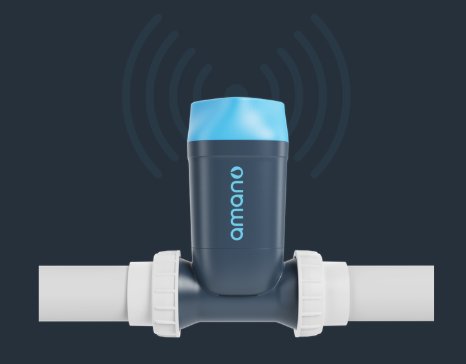
Amano is an automatic liquid-reagent testing system. It tests free chlorine, combined chlorine, pH, and total alkalinity on a configurable schedule, sends results using built-in cellular connectivity, and stores a timestamped digital history.
Amano does not automatically dose chemicals. It can complement an existing chemical controller rather than being positioned as a universal replacement for continuous control.
Amano is best evaluated against the job of scheduled direct chemistry testing and remote visibility. If the facility needs continuous automated dosing control, that requirement should remain with an appropriate controller.
See Amano reagent testing on your pools
See how scheduled reagent tests, cellular reporting, and timestamped logs fit your properties.
For automatic reagent testing, the operating team should document the measurement, surrounding conditions, and follow-up action so the next decision is based on evidence rather than memory.
Quick FAQ
Are pool sensors continuous?
Many pH/ORP systems provide frequent or continuous readings, depending on the controller.
Is reagent testing continuous?
Typically no; it performs discrete tests on a schedule.
Which is better for chemical feed control?
Continuous sensor systems are commonly used for that job.
Which is better for direct scheduled chemistry values?
A reagent system can be attractive when it directly tests the parameters the operator wants to track.
Talk through your pools with us
Thirty minutes, your properties, your water-testing setup. No obligation.
Primary sources and scope
Reviewed September 16, 2026. The sources below provide public-health and label context. Amano product details on this page come from current Amano materials.