Scope: This is general operating guidance. Follow your local health department and adopted code, facility SOP (standard operating procedure), chemical label, and equipment-manufacturer instructions.
Two Different Ways to Automate Chemistry Information
Probe systems and automatic reagent testers both reduce dependence on a person manually taking every reading, but they work very differently. Both approaches sit under the umbrella of commercial pool monitoring.
Probe systems continuously or frequently sense an electrochemical property. Automatic reagent systems periodically take a sample and perform a chemical reaction. Understanding that difference is more useful than asking which technology is universally “better.”
How Pool Probes Work
Commercial pool controllers commonly use pH and ORP electrodes. The sensors sit in the water or a sample stream and generate an electrical signal that the controller interprets.
The main advantage is frequency. The system can observe changes continuously or at very short intervals and can use the signal for automated control.
How Automatic Reagent Testing Works
A reagent tester takes a water sample, adds reagent, measures the resulting reaction, calculates the chemistry value, records it, and repeats the process on a schedule.
Instead of maintaining a continuous immersed chemistry-sensor baseline for those tests, the system performs a fresh chemical reaction each time.
Probe measurement workflow
- Sensor sits in water or sample stream
- Generates continuous electrical signal
- Controller interprets and optionally doses
- Sensor cleaned, calibrated, verified, replaced
Reagent-test workflow
- Draws a water sample on a schedule
- Adds reagent and measures the reaction
- Records a direct chemistry value
- Reagent supply and fluid path maintained
Measurement Type
Probe systems are especially strong when a continuous control signal is needed. ORP, however, is not a direct free-chlorine ppm result.
Reagent testing can be designed to directly measure specific chemistry parameters such as free chlorine, combined chlorine, pH, or alkalinity. The exact capability depends on the device.
Frequency
Probes can provide continuous or near-continuous information. Reagent systems generally test at scheduled intervals because each test consumes reagent and requires a test cycle.
The right frequency depends on the use case. Chemical feed control may benefit from continuous sensing. Portfolio oversight may value direct scheduled chemistry tests and a clear history.
Calibration and Maintenance
Probe systems require maintenance according to manufacturer instructions, which can include cleaning, calibration or verification, and eventual sensor replacement (see why pool probes drift).
Reagent systems have a different maintenance burden: reagent replacement plus maintenance of the fluid-handling/testing mechanism. “No probes” does not mean “no maintenance.” It means the maintenance model is different.
Failure Modes
With a probe system, an unexpected number may come from a real water change, fouling, calibration drift, installation conditions, or a failing sensor.
With a reagent system, operators instead need to consider reagent supply, sampling, fluid handling, optics or detection mechanisms, and device operation. Every measurement technology has a chain that must remain trustworthy.
Which Is Better for Chemical Control?
Probe-based ORP/pH controllers are widely used for continuous chemical control because they provide frequent feedback. An automatic reagent tester that only reports scheduled results should not be described as a drop-in replacement for every control function.
Which Is Better for Direct Chemistry Visibility?
If the goal is scheduled direct measurement of parameters such as free chlorine and combined chlorine without routine chemistry-probe calibration, automatic reagent testing can be attractive.
This is especially relevant for organizations that want remote chemistry history across many pools.
Where Amano Fits
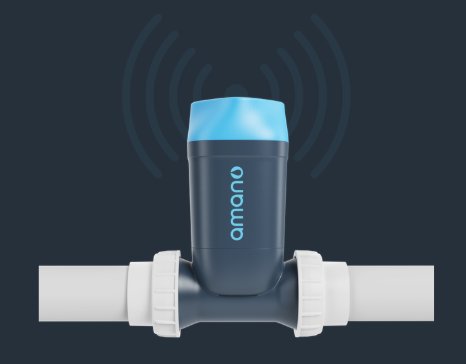
Amano uses liquid reagents for free chlorine, combined chlorine, pH, and total alkalinity. Current Amano materials describe typical testing twice daily with adjustable timing/frequency, built-in cellular, and timestamped digital logs.
Amano does not dose chemicals. It should be positioned as a testing/monitoring layer rather than a universal replacement for a pool’s chemical controller.
Reagent testing without probe calibration
See how Amano uses scheduled liquid-reagent tests for free chlorine, combined chlorine, pH, and total alkalinity.
Decision Checklist
Choose based on the job: Do you need continuous control? Direct scheduled chemistry values? Which parameters? How much calibration work can the team support? What consumables are acceptable? How will the results be logged and shared? Does the device fit the existing controller rather than unnecessarily replacing it?
A clear answer to those questions is more useful than a generic “probe vs reagent” winner.
Probes vs. Reagent Testing FAQ
Do reagent testers need maintenance?
Yes. Reagents and device components require maintenance even though chemistry-probe calibration is not part of those tests.
Are probes inaccurate?
Not inherently. Properly maintained probes can be very useful.
Does ORP directly measure free chlorine?
No.
Can reagent testing and a probe controller coexist?
Yes. They can serve different functions.
Talk through your pools with us
Thirty minutes, your properties, your water-testing setup. No obligation.
Primary sources and scope
Reviewed September 16, 2026. The sources below provide public-health and label context. Amano product details on this page come from current Amano materials.