Scope: This is general operating guidance. Follow your local health department and adopted code, facility SOP (standard operating procedure), chemical label, and equipment-manufacturer instructions.
What ORP Calibration Is—and Is Not
That distinction matters. If an operator expects an ORP probe to behave like a chlorine ppm sensor, perfectly healthy equipment can look “wrong” simply because the two measurements answer different questions.
ORP should be interpreted as its own measurement. If a facility wants to know free-chlorine concentration, it should use an appropriate chlorine test. Keeping those questions separate prevents technicians from adjusting a healthy ORP sensor simply because a ppm result moved.
Start With the Manufacturer
ORP maintenance procedures differ by sensor and controller. Some manufacturers specify a reference-solution check, some provide an adjustment procedure, and some distinguish verification from calibration. Follow the instructions for the exact equipment installed at the facility.
Avoid universal internet recipes. The reference solution, temperature considerations, cleaning method, acceptable tolerance, and replacement criteria should come from the manufacturer or qualified service documentation.
Save the actual manual or service bulletin with the facility's maintenance documentation. Staff turnover is common, and the next technician should not have to search the internet from the equipment room to learn which reference solution or procedure applies. For the portfolio-wide picture of scheduled testing, alerts, and records, see our guide to commercial pool monitoring.
Why an ORP Reading Can Change
ORP responds to the oxidation-reduction environment of the water. Chlorine chemistry strongly influences it, but pH and other water conditions can also change the response. A moving ORP number is therefore not automatically evidence of sensor drift.
Before touching the calibration setting, look at the water. Did pH move? Did bather load spike? Was chemical feed changed? Did circulation stop? Was the sample stream interrupted? The pool may be telling you something real.
Review pH beside ORP whenever possible. A meaningful pH change can alter the ORP response even when free chlorine has not moved in a simple one-to-one fashion. That context can prevent unnecessary sensor work.
Check Flow and Installation First
A probe can only measure the water reaching it. Poor flow through a sample cell, air bubbles, a closed valve, debris, incorrect installation, or a stagnant sample line can produce misleading behavior even when the electrode itself is fine.
Commercial troubleshooting should begin with the physical measurement path: confirm water is moving as designed, inspect the sensor chamber, and verify that the installation still matches the controller manufacturer's requirements.
Sample-cell flow should be part of routine inspection, not only emergency troubleshooting. Mark normal valve positions where appropriate, keep strainers serviceable, and document the expected flow arrangement so a maintenance change does not quietly alter the measurement environment.
Clean the Electrode Correctly
Scale, oils, films, and other deposits can coat the electrode surface and slow or distort response. Cleaning may restore performance, but only when it is done with the method approved for that sensor.
Do not improvise with abrasive pads or aggressive chemicals because they are convenient in the equipment room. A five-minute shortcut can turn a dirty probe into a damaged probe.
After cleaning, allow the sensor the stabilization time specified by the manufacturer before judging the result. An impatient reading taken seconds after service can create another false alarm and send the technician back through the same troubleshooting loop.
Use a Known Reference
A proper ORP reference check gives the operator a controlled condition against which to evaluate the sensor. The solution must be appropriate for the equipment, within its usable life, handled correctly, and used at the conditions specified by the manufacturer.
If several probes all “fail” against the same questionable bottle of reference solution, the bottle deserves suspicion too. Measurement quality includes the reference materials, not just the electrode.
Reference materials deserve basic inventory control. Record opening dates where relevant, keep them under specified storage conditions, and discard them according to the manufacturer's instructions. A questionable standard cannot validate a questionable sensor.
ORP Calibration vs. Free-Chlorine Testing
A direct free-chlorine test and an ORP reference check serve different purposes. The chlorine test tells you concentration. The ORP procedure tells you whether the ORP measurement system behaves appropriately against its reference.
Commercial pool operators may use both types of information. In fact, keeping them conceptually separate prevents one of the most common interpretation errors in automated pool chemistry.
Put both values on the same trend view when the system allows it, but label them clearly. Seeing ORP, free chlorine, and pH together can help operators understand relationships without pretending one is a mathematical translation of another.
Document the Before and After
Record the ORP reading before service, cleaning performed, reference result, any adjustment, final result, date, technician, and sensor identification. If the probe begins requiring service more often, that history becomes valuable evidence that the sensor may be aging or that the installation has a recurring problem.
Without records, every service call starts from zero. With records, a technician can see whether today's strange reading is a first-time event or episode seven of the same series.
Maintenance notes should include whether the reading problem was resolved. That final outcome is important: it distinguishes a successful cleaning from a temporary adjustment and makes future replacement decisions easier.
Know When to Replace the Probe
An ORP electrode that cannot pass the manufacturer's verification procedure, stabilizes poorly, has physical damage, or repeatedly falls out of acceptable performance may be nearing replacement. Replacement criteria should be based on the manufacturer's guidance and observed performance, not an arbitrary birthday.
This is another reason to track maintenance history: it helps distinguish a sensor that needs one cleaning from a sensor that has become a recurring labor project.
Keep a spare strategy appropriate to the facility. A critical controller sensor failing on a holiday weekend is a much bigger operational problem when the only replacement is three shipping days away. For more on what ORP does and does not tell you, see whether ORP measures chlorine and our guide to automatic pool water testing.
Practical Operator Workflow
When an ORP reading looks questionable, use a fixed troubleshooting order so the team does not jump straight to the calibration menu. First, record the current ORP, pH, recent free-chlorine test, controller output, and any active alarms. Second, confirm sample flow and inspect the flow cell for air, debris, or a valve problem. Third, inspect and clean the electrode according to the manufacturer. Fourth, use the specified ORP reference solution and allow the reading to stabilize for the required time. Fifth, document whether the probe passed, required adjustment, or failed. Finally, return the system to normal operation and confirm that the live reading behaves sensibly. This sequence protects the operator from confusing a water-chemistry change with a sensor problem. It also creates a clean service record for the next technician. For multi-site teams, turn the sequence into a mobile checklist and require a photo or recorded result for failed reference checks. The point is not bureaucracy. It is to make sure a probe is never 'fixed' by an undocumented adjustment that nobody can explain a month later.
Where Amano Fits
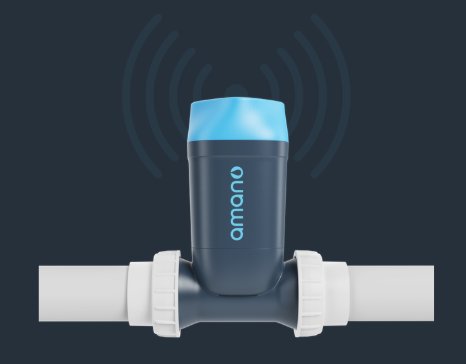
Amano does not use an ORP value as its free-chlorine result. Its system performs liquid-reagent tests for free chlorine, combined chlorine, pH, and total alkalinity on a schedule.
For facilities that already use an ORP controller, Amano can be positioned as a separate testing and monitoring layer rather than a claim that ORP has no value. Continuous control and scheduled direct chemistry testing can serve different operational purposes.
For a facility with an existing ORP controller, the most defensible positioning is complementary visibility. The controller can continue doing the control job while scheduled reagent tests provide direct chemistry values and a separate digital history.
Compare ORP upkeep with Amano reagent testing
See how scheduled reagent tests give direct chemistry values without routine chemistry-probe calibration.
See a Different Approach to Automated Chemistry Testing Request a Demo
For ORP probe calibration, the operating team should document the measurement, surrounding conditions, and follow-up action so the next decision is based on evidence rather than memory.
Quick FAQ
Does ORP calibration tell me the chlorine ppm?
No. ORP is measured in millivolts and is not a direct chlorine-concentration test.
Should I adjust ORP because a manual chlorine test changed?
Not automatically. Investigate water chemistry, flow, sensor condition, and the manufacturer's verification procedure.
How often should an ORP probe be checked?
Use the manufacturer's schedule and respond sooner when readings, service history, or operating conditions warrant it.
Can Amano replace an ORP controller?
Amano should not be presented as a universal controller replacement. It is a reagent-based testing, logging, and monitoring system.
Talk through your pools with us
Thirty minutes, your properties, your water-testing setup. No obligation.
Primary sources and scope
Reviewed September 16, 2026. The sources below provide public-health and label context. Amano product details on this page come from current Amano materials.