Scope: This is general operating guidance. Follow your local health department and adopted code, facility SOP (standard operating procedure), chemical label, and equipment-manufacturer instructions.
Start With the Parameters That Drive Decisions
The right monitoring list begins with what the operator must control and what the local code requires. Commercial-pool requirements vary by jurisdiction and facility type, so the mandatory list for a given property comes from the authority having jurisdiction, not from a national chart.
Do not add measurements merely because a dashboard has room for another tile. Every parameter on the list should map to a decision someone actually makes: hold or correct, open or close, dispatch or wait. A measurement without a decision attached is decoration.
Free Chlorine
Track free chlorine because it represents available disinfectant concentration, the value bather safety depends on most directly. The 2024 Model Aquatic Health Code lists a minimum free chlorine of 1 ppm as a reference value, with local adopted code setting the actual requirement.
Interpret it with pH and facility requirements rather than as an isolated green/red number. Free chlorine at low pH and free chlorine at high pH do not perform identically, and a value inside the range at a quiet morning hour tells a different story from the same value after a packed afternoon. The free chlorine that keeps dropping guide covers the common decline patterns. For the portfolio-wide picture of scheduled testing, alerts, and records, see our guide to commercial pool monitoring.
Combined Chlorine
Combined chlorine helps identify the portion of chlorine that has reacted with nitrogen-containing contaminants. Trend it when bather load and chloramine management matter, which in a commercial facility is nearly always.
The 2024 MAHC lists a combined-chlorine action concentration above 0.4 ppm as a reference value rather than a universal limit. Because the value is usually calculated as total chlorine minus free chlorine, it rewards consistent technique. The background is in free chlorine vs. combined chlorine.
pH
pH belongs on every operating picture because it affects chlorine chemistry and can signal feed, aeration, source-water, or buffering changes. The 2024 MAHC lists a reference pH range of 7.0 to 7.8 for public pools, with local adopted code setting the actual operating range.
pH is also the most mobile value on the panel, which makes its trend more informative than any single reading. A stable pH with quietly climbing alkalinity and a stable pH on a failing buffer look the same today and behave differently next week.
Total Alkalinity
Alkalinity changes more slowly than pH in many pools but provides valuable context for acid demand and pH stability. The 2024 MAHC lists a reference total alkalinity range of 60 to 180 ppm, with local code setting the actual requirement.
It is particularly useful when pH problems keep returning. Persistent rising pH and persistent dropping pH both frequently trace back to the buffer, and the pH vs. alkalinity relationship explains the mechanics.
Other Parameters Still Matter
Calcium hardness, temperature, flow, and other measurements may matter depending on pool type, treatment system, and jurisdiction. A spa, a competition pool, and an outdoor seasonal pool do not share an identical panel.
This page should not imply four values are the entire code. The four-parameter core covers daily operating chemistry; the full requirement set for a given property comes from the authority having jurisdiction and the facility's own operating plan.
Frequency Depends on Code and Facility
Testing frequency is not universal. Follow the authority having jurisdiction first, then add monitoring frequency based on bather load, risk, equipment, and the operational need for earlier warning.
The code minimum is a floor, not an operating strategy. A quiet rooftop pool and a waterpark can share a jurisdiction and still justify very different testing rhythms, because the cost of discovering a problem late scales with the load that created it.
Manual Tests and Automated Monitoring
Automation can add observations and history, while manual testing and physical inspection remain necessary where required. The technologies should support the operating program rather than compete for a marketing trophy.
The practical split: automated scheduled tests build the dense timeline and catch the trend, manual verification confirms surprising results, and physical inspection covers what no water test can see. Each layer covers the blind spots of the others, which is the point of having layers.
Thresholds Need Context
An alert threshold should map to an actual response. Avoid creating so many warnings that staff learn to ignore them; prioritize conditions that require verification or action.
Alert fatigue is a real operational failure mode. A system that pages the team for every wobble trains the team to silence pages, and the one alert that mattered gets the same treatment as the fifty that did not. Fewer thresholds, each with a defined owner and action, outperform a wall of alarms.
Build Alerts Around Action
Route alerts to people who can respond, include the parameter and time, and define escalation when the first recipient does not close the loop. An alert without ownership is just a notification-shaped decoration.
The escalation path is what makes the alert system trustworthy for management: if the first recipient acknowledges and acts, the loop closes locally; if not, the alert climbs until someone with authority responds. Either way, the record shows who saw what and when.
Practical Operator Workflow
Every monitored level earns three definitions: what range is normal here, what reading triggers verification, and what reading triggers action. Post those where the testing happens, train every shift on them, and review them when code or equipment changes. A number without a defined response is trivia; a number with one is an operating system.
What Good Operations Look Like
A mature monitoring program is ruthlessly practical. Every level on the panel has a range, a verification trigger, an action trigger, and an owner. Alerts route to people who can act, with escalation when they cannot. The list of parameters matches what the code requires and what the facility actually controls, and nothing rides along because a dashboard had space. The measure of the program is not how much it watches, but how reliably the right person responds.
Where Amano Fits
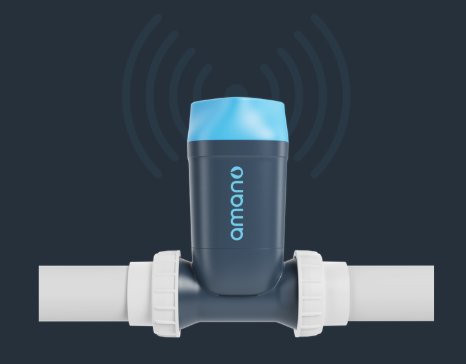
Amano monitors the levels in this guide with scheduled reagent-based water tests for commercial pools: free chlorine, combined chlorine, pH, and total alkalinity. Results are timestamped, alerts go out after completed tests, and logs can be shared by QR code without an Amano login.
For teams building a monitoring program around the levels in this guide, the practical value is that the four-parameter core runs on schedule without consuming shift hours. Test frequency is adjustable, alerts carry the parameter and timestamp to the people who can respond, and completed tests across multiple properties are reviewable in one app, which gives the threshold-and-escalation design a data stream worth routing.
Amano supports the operator's process. It does not add chemicals, and it does not replace testing, verification, or safety duties imposed by the local authority having jurisdiction.
Monitor the core levels automatically
See how scheduled reagent tests track the four-parameter core with alerts after every completed test.
Quick FAQ
What chemical levels should I monitor?
Monitor the parameters required by your jurisdiction and facility, plus the measurements needed to operate the water safely and consistently. Free chlorine, combined chlorine, pH, and total alkalinity form the common core; the authority having jurisdiction defines the full mandatory list.
Are the same limits used everywhere?
No. Commercial-pool requirements vary by jurisdiction and facility type. Reference values like the MAHC's are model guidance; the enforceable limits for a given property come from local adopted code.
Can alerts replace an operator?
No. Alerts surface data; people still verify conditions and perform required corrective work. An alert shortens the time between a change and a human knowing about it, and that is the whole job.
Why monitor alkalinity?
It helps operators understand buffering and recurring pH behavior. When pH problems keep returning, alkalinity is frequently the reason, and the trend shows it weeks before the pH complaints start.
Talk through your pools with us
Thirty minutes, your properties, your water-testing setup. No obligation.
Primary sources and scope
Reviewed September 16, 2026. The sources below provide public-health and label context. Amano product details on this page come from current Amano materials.