Scope: This is general operating guidance. Follow your local health department and adopted code, facility SOP (standard operating procedure), chemical label, and equipment-manufacturer instructions.
The Quick Difference
Looking at only one can hide useful context. Commercial pool chemistry is much easier when each chlorine number gets its own job description.
The distinction also matters for communication. Staff should avoid writing simply 'chlorine' in notes when the difference between free, combined, and total affects the decision being made.
Where Total Chlorine Fits
Total chlorine is generally the combination of free chlorine and combined chlorine in common pool-testing terminology. Depending on the method, combined chlorine can be determined by comparing total chlorine with free chlorine.
That relationship explains why “the chlorine is 4 ppm” is an incomplete statement unless you know which chlorine measurement the person means.
When combined chlorine is calculated as a difference, the quality of both underlying measurements matters. Consistent technique and appropriate test resolution are essential before reacting to a small calculated number. For the portfolio-wide picture of scheduled testing, alerts, and records, see our guide to commercial pool monitoring.
What Free Chlorine Tells You
Free chlorine indicates the disinfectant residual available in the water. Maintaining an appropriate residual is a core part of commercial pool operation, with required ranges determined by the applicable jurisdiction and facility conditions.
A free-chlorine result answers a concentration question. It does not, by itself, explain all of the chlorine demand or contamination history.
Free chlorine should be interpreted with pH, operating conditions, and the applicable required range. A concentration number is necessary information, but not the entire disinfection story.
What Combined Chlorine Tells You
Combined chlorine provides information about chlorine that has reacted with certain nitrogen-containing contaminants. Elevated combined chlorine can prompt operators to investigate bather load, contamination, treatment, and other operating conditions.
It is therefore less about “how much sanitizer is ready” and more about what has happened to part of the chlorine in the water.
Combined chlorine is especially useful as a trend. A repeated rise at predictable times can point toward load or treatment patterns that deserve operational attention.
Why a Pool Can Have Chlorine and Still Need Attention
A pool may show measurable total chlorine while free chlorine is lower than expected or combined chlorine is elevated. That is why total chlorine alone can be misleading for operational decisions.
A complete chlorine picture separates the available residual from the combined portion.
This is why dashboards and logs should label chlorine species explicitly. A single green 'chlorine' indicator can hide whether the value represents free, total, ORP, or something else.
The Smell Myth
People often associate a strong “chlorine” smell with too much free chlorine. In many cases, chloramines and other byproducts are important contributors to the odor and irritation people notice around pools.
Your nose is excellent at telling you something deserves attention. It is terrible at reporting ppm.
Odor complaints should trigger measurement and investigation rather than an assumption. Indoor ventilation, bather load, combined chlorine, and other conditions may all be relevant.
ORP Is a Different Measurement Again
ORP measures oxidation-reduction potential in millivolts. It is influenced by chlorine chemistry but does not directly report either free-chlorine ppm or combined-chlorine ppm.
A commercial pool may use ORP for continuous control while still performing direct chlorine testing. Those tools are complementary when operators understand what each one measures.
An ORP controller can remain valuable even when direct free and combined chlorine tests are available. The measurements can coexist because they support different decisions.
How Operators Use Both Values
Review free chlorine to understand available disinfectant concentration. Review combined chlorine to understand the combined portion and whether treatment or operating conditions deserve attention. Then look at pH and the broader facility context.
Chemistry works better as a panel than as four unrelated numbers on a clipboard.
Create action thresholds and procedures based on the code and facility plan so staff know what each result means operationally. Good data without a response process is just a nicer spreadsheet.
Why Trends Improve the Diagnosis
If free chlorine falls every afternoon while combined chlorine rises, that pattern tells a richer story than either value alone. If both remain stable except after a particular high-use program, that is another useful clue.
Timestamped history lets operators connect chemistry with operations instead of relying on memory after the fact.
Plotting free and combined chlorine together can reveal whether available residual is falling as combined chlorine rises, whether both are stable, or whether an event affected only one side of the picture. For the byproduct deep-dive, see what combined chlorine is, and for the demand side, why free chlorine keeps dropping.
Practical Operator Workflow
A good chlorine log should make free, combined, and total chlorine impossible to confuse. Use separate labeled fields and train staff to name the parameter when communicating by text, phone, or work order. When a result is unusual, review the three values together with pH and the recent operating history. For example, a falling free-chlorine residual paired with rising combined chlorine suggests a different situation from a stable free residual with low combined chlorine. If total chlorine is recorded, make sure the team understands how it relates to the other two values under the test method being used. Automated dashboards should follow the same principle: never hide distinct chemistry behind one generic 'chlorine' tile. Clear labels reduce interpretation errors and make handoffs easier between onsite staff, service companies, and regional management. They also improve troubleshooting because the next person can see which number actually changed. In pool operations, vocabulary is not academic decoration. Using the right chlorine term can change the action the operator takes.
For training, give new operators several example chlorine panels and ask them to explain each one in words before discussing corrective action. The exercise exposes vocabulary problems quickly. If someone calls total chlorine 'free chlorine' or assumes ORP is another chlorine ppm value, correct the concept before it reaches a live pool. Clear terminology also improves vendor conversations because the team can ask exactly which chlorine species a device measures and how that result is produced.
When comparing monitoring products, ask vendors to show free chlorine, combined chlorine, and any calculated total chlorine as separate fields in a real report. Then ask what test method produces each value and what maintenance supports it. This simple demonstration can reveal whether the product truly provides the chlorine detail the operation wants or merely uses the word 'chlorine' as a broad marketing label.
Where Amano Fits
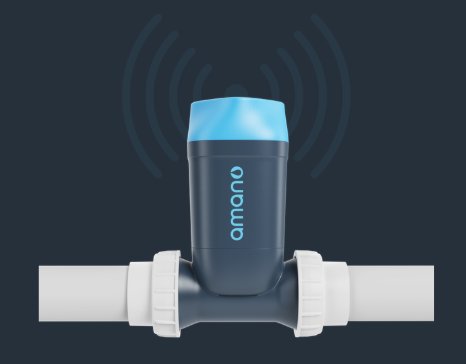
Amano automatically performs scheduled liquid-reagent tests for both free chlorine and combined chlorine, along with pH and total alkalinity. The system stores the readings as a timestamped digital history and can surface out-of-range results to the team.
Amano does not dose chemicals and should not be represented as replacing required manual tests. Its role is to give operators another set of direct chemistry observations between physical visits.
The paired automated results are particularly useful for remote teams because the relationship between free and combined chlorine is visible without waiting for someone to summarize a paper log.
Track free and combined chlorine automatically
See how scheduled reagent tests report both values as timestamped digital records.
For free chlorine vs combined chlorine, the operating team should document the measurement, surrounding conditions, and follow-up action so the next decision is based on evidence rather than memory.
Quick FAQ
Is free chlorine part of total chlorine?
Yes, in common pool-testing terminology total chlorine includes free plus combined chlorine.
Can total chlorine look okay while free chlorine is low?
Yes. That is why distinguishing the components matters.
Does combined chlorine disinfect the same way as free chlorine?
Operators rely on free chlorine as the available disinfectant residual; combined chlorine represents different chlorine chemistry.
Can one automated system measure both?
Some reagent-based systems can. Amano's current commercial system reports both free and combined chlorine.
Talk through your pools with us
Thirty minutes, your properties, your water-testing setup. No obligation.
Primary sources and scope
Reviewed September 16, 2026. The sources below provide public-health and label context. Amano product details on this page come from current Amano materials.