Scope: This is general operating guidance. Follow your local health department and adopted code, facility SOP (standard operating procedure), chemical label, and equipment-manufacturer instructions.
What 'Won't Hold Chlorine' Usually Means
The useful question is where the chlorine is going: being consumed by demand, lost to environmental conditions, diluted, or simply not being added at the expected rate.
Define 'expected' before diagnosing. Compare the pool with its own recent baseline under similar use, weather, and operating conditions. A busy Saturday should not be judged against an empty Tuesday morning.
Confirm the Test Before Chasing the Problem
Start with a reliable free-chlorine test using proper technique and good reagents or instrumentation. If the result is surprising, repeat or verify it before making a major correction.
A bad test can create a very convincing fake problem. So can sampling from a location that does not represent the pool well.
Check reagent expiration, sample volume, test-cell cleanliness, and operator technique. When the diagnosis depends on a small difference, measurement discipline matters. For the portfolio-wide picture of scheduled testing, alerts, and records, see our guide to commercial pool monitoring.
Look for High Chlorine Demand
Heavy bather load and contaminants can consume chlorine. If the pool is busy, the demand may simply be higher than the normal feed rate can replace during peak use.
Compare chlorine decline with occupancy, events, swim lessons, weekends, or other predictable changes. Commercial pools often have schedules hidden inside their chemistry.
Review combined chlorine and recent contamination or bather-load events for context. High demand is not a single diagnosis; it is a category of causes that still needs investigation.
Inspect the Feeder and Chemical Supply
Make sure the sanitizer system has chemical, power, flow, and the ability to deliver at the intended rate. Check for clogged lines or injectors, pump problems, controller alarms, empty containers, and valves in the wrong position.
A chemistry problem that begins immediately after maintenance or a chemical change deserves an equipment check early in the process.
Verify both command and delivery. A pump stroke setting, controller output, and actual chemical movement can tell three different stories when equipment is malfunctioning.
Outdoor Pools Have an Extra Variable
Sunlight can increase chlorine loss in outdoor water. Stabilizer chemistry may be relevant, but commercial-pool use of cyanuric acid is governed by local requirements and facility design.
Do not copy residential-pool advice blindly into a regulated commercial facility. The pool may be bigger, busier, differently controlled, and subject to different rules.
Seasonal changes matter. The same outdoor pool can behave differently in May and July because sunlight, temperature, occupancy, and operating hours all changed.
Dilution and Water Replacement
Backwashing, splash-out, leaks, rain, and makeup water can change chemistry. Significant water replacement can lower chlorine concentration and alter other parameters at the same time.
If several chemistry values shift together, water replacement may be part of the story.
Check makeup-water totals or known events where available. Large additions can move chlorine, pH, alkalinity, and other parameters together, creating a pattern that looks different from pure chlorine demand.
Combined Chlorine Adds Context
Free chlorine tells you what is available. Combined chlorine can provide additional information about chlorine that has reacted with certain contaminants.
A pool that repeatedly struggles with free chlorine while combined chlorine is also elevated deserves a broader look at bather load, contamination, treatment, and ventilation in indoor settings.
If combined chlorine repeatedly rises during the same periods that free chlorine struggles, investigate the operating conditions creating that load rather than treating each low residual as unrelated.
Use a Time Series to Find the Pattern
Record chlorine at consistent times and compare it with feed operation and pool use. Does it fall only during the afternoon? Overnight? Immediately after opening? Only on weekends?
Once you know when the loss occurs, troubleshooting becomes much more targeted. “It never holds chlorine” often turns into “it drops between 2 and 5 PM on high-use days.” That is progress.
Even two or three consistent observations per day can be more informative than a stack of random tests. Consistency lets the operation compare like with like.
Correct the Cause, Then Verify
Follow the facility's approved chemical procedure and local requirements. After corrective action, retest to confirm the result and continue watching the trend.
If the same problem returns, treat it as a recurring operating issue rather than another isolated low reading.
Close the loop in the log. Record what was changed and what the follow-up test showed. Without that final verification, the team cannot tell whether the intervention actually worked. For the closely related symptom, see why free chlorine keeps dropping, and for the byproduct angle, what combined chlorine is.
Practical Operator Workflow
When a pool 'will not hold' chlorine, resist the urge to evaluate each low test as a brand-new emergency. Build a cause tree. On the demand side, consider heavy use, contamination, outdoor loss, and unusual water conditions. On the supply side, confirm chemical inventory, feed-pump operation, controller command, injector condition, flow interlocks, and actual delivery. On the dilution side, look for backwashing, leaks, splash-out, rain, or large makeup-water additions. On the measurement side, verify the test and sampling location. Then use timing to rank the possibilities. If chlorine rises after dosing and collapses only during busy hours, demand moves up the list. If it never rises despite a controller calling for feed, delivery becomes more suspicious. If several chemistry parameters shift after a major water addition, dilution deserves attention. This structure prevents the common troubleshooting failure of adding more chlorine to compensate for a feeder that is not actually feeding. It also gives supervisors a consistent way to review recurring problems across properties.
A recurring chlorine-holding problem should have an owner. Assign someone to review the trend after the immediate correction instead of allowing the work order to close as soon as the residual returns to range. That follow-up can be as simple as checking the next several scheduled tests and confirming feeder behavior. Without ownership, the same pool can generate ten 'low chlorine' tickets that are each solved temporarily but never connected. The operational win comes from turning repeated corrective work into one root-cause project.
When the investigation is complete, capture the cause in a standardized category such as demand, feed equipment, dilution, testing, circulation, contamination, or unresolved. Those categories make portfolio reporting much more useful than a long list of identical 'low chlorine' work orders. After a season, management can see whether the organization has a chemistry problem, an equipment problem, a training problem, or several different problems wearing the same label.
Where Amano Fits
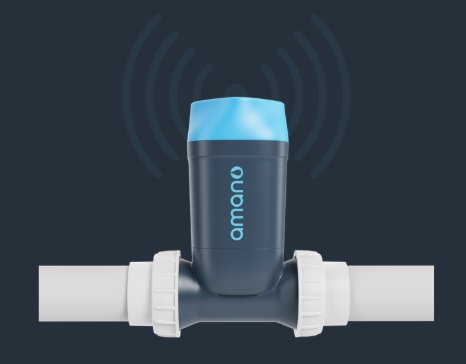
Amano's scheduled reagent tests create a digital history of free chlorine, combined chlorine, pH, and total alkalinity. That history can make recurring chlorine-loss patterns easier to see across days and properties.
Amano monitors and alerts; it does not add sanitizer. It can tell the team more about what happened between visits, while the operator remains responsible for diagnosis, physical inspection, and correction.
Automatic timestamping reduces the chance that useful chemistry history disappears into separate clipboards or text threads. That is especially valuable when several people share responsibility for the same pool.
See chlorine trends between visits
See how scheduled automatic tests reveal when chlorine falls and whether the response worked.
For pool won't hold chlorine, the operating team should document the measurement, surrounding conditions, and follow-up action so the next decision is based on evidence rather than memory.
Quick FAQ
Why does chlorine disappear right after I add it?
High demand, contamination, testing error, dilution, or other conditions may consume or reduce the measured residual quickly.
Can a feeder cause a pool not to hold chlorine?
Yes. If chlorine is not being delivered as expected, the residual can fall even without unusual demand.
Should I keep adding chlorine until it stays up?
Follow the facility's approved procedure and diagnose the cause rather than repeatedly dosing without understanding the problem.
Can trend data help?
Yes. Timing often reveals whether the loss is linked to use, sunlight, equipment, or another recurring condition.
Talk through your pools with us
Thirty minutes, your properties, your water-testing setup. No obligation.
Primary sources and scope
Reviewed September 16, 2026. The sources below provide public-health and label context. Amano product details on this page come from current Amano materials.