Scope: This is general operating guidance. Follow your local health department and adopted code, facility SOP (standard operating procedure), chemical label, and equipment-manufacturer instructions.
Combined Chlorine in Plain English
If free chlorine is the employee still available for work, combined chlorine is the paperwork showing that some of the work has already happened. Not a perfect chemistry analogy, but useful enough to survive the equipment room.
The number becomes most useful when paired with free chlorine. Together they separate available disinfectant from the portion that has reacted, giving operators a clearer picture than a single generic 'chlorine' value.
How Combined Chlorine Relates to Total Chlorine
In common pool testing, total chlorine represents free chlorine plus combined chlorine. Combined chlorine is often determined from the difference between total and free chlorine, depending on the test method.
That is why a pool can have a respectable total-chlorine number while the free-chlorine portion tells a less comfortable story.
Small differences can be sensitive to test precision, so technique matters. Use the appropriate method and do not over-interpret a tiny calculated value beyond the resolution of the test. For the portfolio-wide picture of scheduled testing, alerts, and records, see our guide to commercial pool monitoring.
How Chloramines Form
Swimmers introduce nitrogen-containing compounds through sweat, urine, and other contamination. Chlorine can react with those compounds and form chloramines.
The chemistry is more complex than a single reaction, but the operational takeaway is straightforward: combined chlorine provides information about chlorine that has reacted rather than remaining free.
Bather hygiene and facility operations influence the inputs. Encouraging pre-swim showers, managing contamination, and maintaining appropriate treatment can reduce the nitrogen load entering the water.
Why Commercial Operators Care
Elevated combined chlorine can signal a need to review water treatment, bather load, contamination control, and—in indoor facilities—air handling and chloramine management. It can also contribute to the familiar “chlorine smell” people often blame on too much free chlorine.
A strong smell is not a reliable chlorine test. Use an actual test.
Persistent issues deserve a process review. Look at usage patterns, treatment, ventilation for indoor pools, and whether corrective actions actually change the subsequent readings.
Combined Chlorine Is Not ORP
ORP measures oxidation-reduction potential in millivolts. It does not directly report combined chlorine concentration.
If an operation wants a combined-chlorine value, it needs a testing method designed to determine that parameter. This is one reason a single ORP number cannot replace a complete chemistry panel.
This is an important buying question for monitoring systems. Ask whether 'chlorine monitoring' means ORP, free chlorine, total chlorine, combined chlorine, or some combination. The label alone is not specific enough.
Measurement Method Matters
Manual DPD-style testing can be used to determine free and total chlorine, from which combined chlorine can be calculated. Automated reagent systems may also perform chlorine tests, depending on design.
Operators should know whether a device actually measures the parameter or merely infers something related to it.
Automated systems should explain how they derive the combined value and what maintenance supports the test. Direct-sounding dashboards still depend on a real measurement process behind the screen.
What to Do With a High Result
Confirm the reading, review the facility's applicable code and operating procedure, investigate likely sources, and take the corrective action required for that facility. Treatment methods and thresholds can vary by jurisdiction and facility type.
Avoid universal dosing instructions on a general article. Commercial pools deserve site-specific procedures, not chemistry roulette.
Document the initial value, corrective action, and follow-up result. That record helps demonstrate that the facility did more than notice the problem; it responded and verified the response.
Indoor Pools Need an Air Conversation Too
Chloramines can affect indoor air quality, especially when volatile compounds accumulate above the water. Ventilation design and operation therefore matter alongside water treatment.
If an indoor facility has persistent odor or irritation complaints, the investigation should not stop at the chemical log.
Water and air teams should communicate. If the HVAC team changes airflow while the pool team changes treatment, shared records can help explain whether complaints improve and which conditions were present.
Trend Combined Chlorine, Not Just Today's Number
A one-time result can identify a current issue. A history can show whether combined chlorine rises after swim lessons, weekend crowds, certain operating periods, or recurring treatment problems.
Patterns are useful because they let operators improve the process instead of repeatedly treating the symptom.
A recurring moderate rise may be more operationally informative than one isolated spike. Trends can show whether the facility has a predictable load problem that deserves a preventive strategy. For the two-number view, see free chlorine vs. combined chlorine and why free chlorine keeps dropping.
Practical Operator Workflow
Combined chlorine is most useful when the facility decides in advance what it will do with the information. Build a simple response workflow around the applicable code and operating plan. First, confirm an unexpected result with the approved method. Second, review free chlorine and pH at the same time so the chlorine picture is complete. Third, consider recent bather load, contamination events, swim programs, and treatment changes. For indoor pools, include ventilation observations and any odor or irritation complaints. Fourth, take the corrective action required by the facility's procedure. Fifth, retest and record the outcome. Finally, look back at the recent trend. If combined chlorine repeatedly rises during the same program or time of day, the operation has a preventive-management opportunity rather than a series of unrelated incidents. This workflow also improves communication with regional managers because 'combined chlorine was high' becomes a complete story: what the value was, what else was happening, what the team did, and whether the water responded.
Do not use combined chlorine as a standalone score for operator performance. A busy facility can experience changing loads even when staff are attentive, and a single measurement can be affected by test uncertainty. Use the value as an operational signal that prompts confirmation and context. Over time, compare similar periods—weekday lessons to weekday lessons, weekend peaks to weekend peaks—rather than treating every day as identical. That makes the trend fairer and more actionable for staff.
For facilities using automatic testing, decide how automated combined-chlorine results will be confirmed and who receives the alert. The workflow should avoid two extremes: ignoring the number because a person did not take the sample, or treating one automated result as unquestionable truth. A defined confirmation and response process gives the technology a useful role without asking it to replace operator judgment.
Keep the response threshold and confirmation method documented so every shift handles the same result consistently.
Where Amano Fits
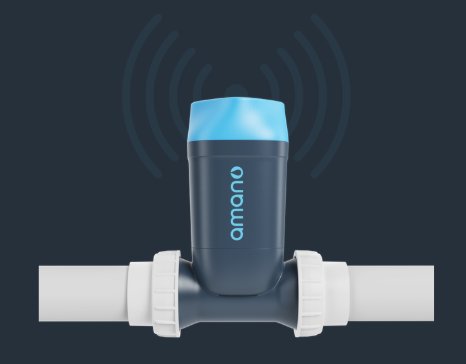
Amano performs scheduled liquid-reagent tests for combined chlorine as part of a four-parameter panel that also includes free chlorine, pH, and total alkalinity.
That gives commercial teams an automatically recorded combined-chlorine history rather than relying exclusively on occasional manual observations. Required manual testing and corrective action still follow the facility's applicable rules.
Because Amano records both free and combined chlorine, teams can review the two values together over time instead of reconstructing the relationship from occasional separate tests.
Measure combined chlorine on a schedule
See how scheduled automatic tests track free and combined chlorine without extra technician steps.
For combined chlorine, the operating team should document the measurement, surrounding conditions, and follow-up action so the next decision is based on evidence rather than memory.
Quick FAQ
Is combined chlorine the same as chloramines?
Combined chlorine is a measurement associated with chlorine that has combined with certain compounds; chloramines are important species within that chemistry.
Is a strong chlorine smell caused by too much free chlorine?
Often the characteristic odor is associated with chloramines rather than simply a high free-chlorine concentration.
Does ORP measure combined chlorine?
No, ORP is not a direct combined-chlorine concentration test.
Why track combined chlorine over time?
Trends can reveal recurring load or treatment patterns that a single test cannot.
Talk through your pools with us
Thirty minutes, your properties, your water-testing setup. No obligation.
Primary sources and scope
Reviewed September 16, 2026. The sources below provide public-health and label context. Amano product details on this page come from current Amano materials.