Scope: This is general operating guidance. Follow your local health department and adopted code, facility SOP (standard operating procedure), chemical label, and equipment-manufacturer instructions.
Commercial pool monitoring is not one technology category.
Chemical controllers, probe-based monitoring systems, and automated reagent-testing systems can all be described as "pool monitoring," but they may measure different things and perform very different jobs. That makes a simple "best commercial pool monitor" ranking potentially misleading. This guide instead compares commercial pool monitoring technologies according to what manufacturers say their systems actually do. We look at systems from companies including Hayward CAT, Innowater, PoolPal, Pulsar, and Amano.
Disclosure
This comparison is published by Amano, and Amano is one of the companies included in this guide. Information about competing products is taken from publicly available materials published by the respective manufacturers. Amano product information is held to the same standard. Product specifications and software features can change. Information on this page was reviewed in September 2026. Buyers should verify current specifications directly with each manufacturer before making a purchasing decision. Amano's goal with this guide is not to declare one universal winner. It is to explain the different approaches available and help commercial pool operators identify which type of system fits the job they need to accomplish.
There Are Several Different Types of Commercial Pool Monitoring
Before comparing products, it helps to separate three jobs that are frequently grouped together.
Chemical Controllers
Commercial pool chemical controllers are designed primarily to help manage water treatment. These systems commonly use sensors such as pH and ORP probes and may control chemical-feed equipment based on the measurements and settings available to the controller. For facilities that need continuous chemical-control capability, this is an important category. Our guide to chemical controllers versus automated testing maps this category in detail.
Probe-Based Monitoring Systems
Another approach uses sensors installed in or connected to the water system to monitor specific water conditions. Depending on the product, sensors may monitor parameters such as pH, ORP, temperature, conductivity, flow, or other measurements. The exact measurements and capabilities vary substantially by manufacturer.
Automated Reagent Testing
Automated reagent-testing systems take water samples and perform chemical tests using reagents. Instead of leaving a chemistry electrode continuously immersed in the water for the parameters being reagent-tested, the system performs individual tests at scheduled intervals. This approach can be useful when operators want automatically generated direct chemistry results and a digital history without requiring a person to perform every test. See how automatic reagent testing works and the broader guide to automatic pool water testing. These categories can overlap. A facility can, for example, use a chemical controller for continuous feed control while separately using automated water testing for additional chemistry measurements and recordkeeping.
Why Measurement Method Matters
A monitoring system should be evaluated according to the measurement it actually produces. ORP provides a useful example. ORP stands for oxidation-reduction potential and is normally reported in millivolts. ORP can be useful for commercial pool control, but it is not the same measurement as a direct free-chlorine concentration reported in parts per million. A system that reports ORP and a system that directly tests free chlorine ppm therefore provide different information. Neither distinction automatically makes one system appropriate for every facility. What information does your operation need, and how does the system obtain it? For a deeper look at this specific distinction, see ORP vs. free chlorine and probes vs. reagent testing.
Commercial Pool Monitoring Systems to Consider
The following companies represent different approaches to pool monitoring, water testing, and chemical control. They are presented by technology and application, not ranked from best to worst. Every factual statement below is drawn from the manufacturer's own materials, linked in the sources section, reviewed September 2026.
Hayward CAT
Category: Commercial chemical control and monitoring. Hayward's CAT product family (CAT 2000, 3500, 4000, 5000, 5500, and 6000) is a line of commercial water chemistry controllers. According to Hayward's CAT Controller Series model guide, all CAT models monitor and control pH and ORP; select models add temperature, total dissolved solids, and NaCl (salt) measurements; and the CAT 6000 adds free-chlorine sensing, LSI calculation, a touchscreen, and Bluetooth. Hayward's materials state that CAT controllers integrate with existing chemical-feed equipment and connect to the PoolComm remote monitoring app, which can display water quality data, charts, and alarms for a single property or multiple commercial pools, with Wi-Fi and cellular protocols (CAT 5000 materials also list satellite). May be worth evaluating if: Your facility is primarily looking for a commercial chemical-control platform and the specific CAT model's documented capabilities match your requirements. Manufacturer: Hayward.
Innowater
Category: Pool water measurement and dosing-control equipment. Innowater manufactures several relevant product lines. Its pH-Redox Controller continuously measures pH and Redox potential (ORP) and automatically regulates chemical dosing through an integrated peristaltic pump, with optional Modbus communication, and is positioned for both private pools and public facilities. Its Monitor Controller continuously measures free chlorine (a documented range of 0 to 10 mg/l) and pH, and automatically adjusts dosing through pulse dosing pumps, with optional Modbus integration and 4-20 mA outputs; Innowater positions that system for public pools, hotels, schools, sports centres, and spas. May be worth evaluating if: You want measurement and dosing control in one unit and your team can maintain the probes these systems rely on. Manufacturer: Innowater.
PoolPal
Category: Commercial pool automation platform (monitoring plus control). PoolPal (poolpalplatform.com) positions its platform as commercial pool automation spanning chemistry, mechanical systems, safety, and energy. Its SCMC (Smart Chemical Monitoring & Controller) device is described by the manufacturer as testing water continuously and auto-dosing disinfectant and pH control, working with any NSF-certified probe, with real-time alarms. PoolPal states its app streams live pH, ORP, chlorine, temperature, and flow, and that the platform connects by cellular (LTE) or Wi-Fi, with building-management-system integration via API, and supports multi-pool portfolio dashboards and digital compliance logsheets. A separate PoolPal device, RoboArm, is described as performing automated titration testing with Taylor test kits for alkalinity, pH, and chlorine. May be worth evaluating if: You are looking for a broad automation platform across multiple commercial pools rather than a single-purpose measurement device. Manufacturer: PoolPal.
Pulsar
Category: Commercial water treatment systems, including chemical feed and control. Pulsar (a brand of Innovative Water Care, LLC) offers the Pulsar 360 Commercial Pool Solution, which includes calcium-hypochlorite feed systems, a dry-acid pH control feed system, pool chemicals, customizable skid systems, and the GuardTec chemical controller. According to Pulsar's GuardTec product page, GuardTec is an IoT-enabled pool chemistry controller built around ORP and pH sensors, modular relays, a flow cell, and a 7-inch touchscreen, and it lets operators monitor and manage water quality in multiple pools from a single device with mobile access. Pulsar positions its systems for commercial aquatic facilities, including aquatic centers, water parks, municipal and public pools, and hotels. May be worth evaluating if: You want feed equipment, chemicals, and control from one commercial water-treatment supplier. Manufacturer: Innovative Water Care, LLC (Pulsar).
Amano
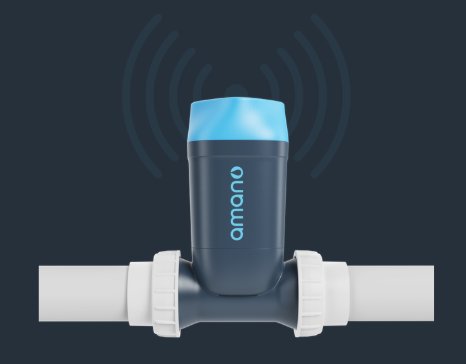
Category: Automated liquid-reagent water testing and monitoring. Amano is designed for commercial pool operators who want scheduled automated chemistry testing and remote visibility across one or multiple properties. Based on Amano's current published product information, Amano uses liquid reagents to test free chlorine, combined chlorine, pH, and total alkalinity. Amano performs scheduled tests and stores results in a digital pool log. The system uses built-in cellular connectivity rather than requiring the property to provide Wi-Fi for normal connectivity. Amano does not automatically dose pool chemicals. That distinction is important. Amano is a water-testing and monitoring system, not a universal replacement for a commercial chemical controller. May be worth evaluating if: Your operation wants scheduled direct chemistry testing, automatic digital records, cellular connectivity, and centralized visibility across commercial pools. Manufacturer: Amano.
Comparison Table
Cells are populated only from the manufacturer's own documentation, reviewed September 2026. "Not identified" means the capability was not found in the manufacturer materials we reviewed; it does not mean the capability does not exist.
| System | Category | Method | FC ppm | CC | pH | TA | ORP | Chem. control | Connectivity | Logs | Multi-pool |
|---|---|---|---|---|---|---|---|---|---|---|---|
| Hayward CAT | Chemical controller | Immersed pH/ORP sensors | Yes (CAT 6000)1 | Not identified | Yes | Not identified | Yes | Yes | Wi-Fi / cellular / PoolComm app2 | Yes (PoolComm charts and records) | Yes |
| Innowater Monitor Controller | Measurement + dosing control | Probe-based continuous measurement | Yes (0-10 mg/l) | Not identified | Yes | Not identified | Not identified3 | Yes (dosing pumps) | Optional Modbus; 4-20 mA outputs | Not identified | Not identified |
| PoolPal SCMC | Automation platform | Probe-based sensing (NSF-certified probes) | Chlorine readings documented4 | Not identified | Yes | Yes (separate RoboArm device)5 | Yes | Yes (auto-dosing) | Cellular (LTE) or Wi-Fi; BAS via API | Yes (compliance logsheets) | Yes |
| Pulsar GuardTec | Chemistry controller (IoT) | Immersed pH + ORP probes | Not identified | Not identified | Yes | Not identified | Yes | Yes (relays; pairs with feed systems) | Cloud / IoT, mobile access | Yes (continuous data record) | Yes |
| Amano | Automated reagent testing + monitoring | Scheduled liquid-reagent tests | Yes | Yes | Yes | Yes | No | No (does not dose) | Built-in cellular | Yes (timestamped digital log) | Yes |
1 Hayward's model guide documents free-chlorine sensing for the CAT 6000; other CAT models document pH and ORP. 2 CAT 5000 materials also list satellite. 3 ORP measurement is documented for Innowater's separate pH-Redox Controller. 4 PoolPal's app documents live chlorine readings; the chlorine measurement specification (for example, ppm versus derived) was not identified in the materials reviewed. 5 PoolPal's RoboArm device documents titration testing for alkalinity, pH, and chlorine.
How to Choose the Right Commercial Pool Monitoring System
There is no single technology that automatically makes sense for every commercial pool. Start with the problem you are trying to solve.
If You Need Automatic Chemical Control
Evaluate systems specifically designed to control chemical-feed equipment. Ask what measurements drive the controller, what safeguards are built into the system, what sensors require maintenance, and how operators verify that the control system is receiving trustworthy information.
If You Need Continuous Sensor Data
Evaluate which sensors are included, what those sensors actually measure, how frequently readings are available, and what calibration, cleaning, and replacement the manufacturer requires. Continuous information can be extremely valuable when the measurement itself matches the operating need.
If You Need Direct Automated Chemistry Tests
Look at systems that automatically perform chemical tests. Ask which chemistry parameters are directly tested, how frequently tests occur, what reagents or consumables are required, and how results are stored and shared. Our commercial pool water testing guide covers the underlying methods.
If You Manage Multiple Properties
The hardware is only part of the decision. Ask whether regional teams can see multiple pools from one account, whether alerts can be routed appropriately, whether historical results can be reviewed remotely, and how information can be shared with onsite employees or service providers.
If Compliance Is the Primary Concern
Start with the requirements that apply to the facility. Commercial-pool rules vary by jurisdiction. No monitoring product should be assumed to eliminate legally required manual testing, physical inspections, operator responsibilities, or recordkeeping unless the applicable authority specifically permits that use. Technology should support the compliance process rather than quietly rewriting it.
For a structured evaluation process, see how to choose a commercial pool monitoring system.
Questions to Ask Every Pool Monitoring Vendor
- What exactly does the system measure?
- How is each measurement produced?
- How frequently is each parameter measured?
- Which measurements are direct concentration measurements and which are indirect measurements?
- What maintenance is required?
- What consumables are required?
- Which components require periodic calibration?
- Which components eventually require replacement?
- Does the system control chemical dosing or only monitor water?
- How does the system connect to the internet?
- What happens when connectivity is lost?
- How are readings stored?
- Can multiple pools or properties be managed from one account?
- How does the system identify a failed or questionable test?
- What manual testing does the manufacturer still recommend?
A vendor that can answer those questions clearly makes comparison much easier.
Where Amano Fits
Amano approaches commercial pool monitoring as automated water testing plus remote operational visibility. Rather than using an ORP measurement as a substitute for a free-chlorine concentration, Amano performs scheduled liquid-reagent tests for free chlorine. The same system also tests combined chlorine, pH, and total alkalinity. Results are automatically timestamped and stored so onsite employees, pool-service providers, and regional teams can review chemistry history without reconstructing it from paper logs. Amano also uses built-in cellular connectivity, which can simplify deployment at properties where connecting another device to facility Wi-Fi would be inconvenient. Amano does not automatically dose chemicals. For facilities that already have chemical controllers, that means Amano can be evaluated as an additional testing and monitoring layer rather than automatically replacing the existing control system.
See How Amano Monitors Commercial Pool Water
The Bottom Line
The phrase commercial pool monitoring system covers several different technologies. Chemical controllers can be appropriate when automatic chemical-feed control is the primary objective. Probe-based systems can provide frequent or continuous sensor information. Automated reagent-testing systems can provide scheduled direct chemistry tests and digital records. The right starting point is therefore not: "Which company is #1?" It is: "What does our facility need measured, how frequently do we need it, and what do we need the system to do with that information?" Once those questions are answered, comparing commercial pool monitoring systems becomes considerably easier.
Frequently Asked Questions
What is a commercial pool monitoring system?
A commercial pool monitoring system uses sensors, automated testing, software, or a combination of technologies to provide information about pool conditions. Capabilities vary significantly between products.
Is ORP the same as free chlorine?
No. ORP measures oxidation-reduction potential and is generally reported in millivolts. Free chlorine is a concentration measurement commonly reported in ppm or mg/L.
Can commercial pool monitoring replace manual water testing?
Do not assume so. Manual-testing and inspection requirements depend on the jurisdiction and facility. Operators should follow the requirements of their authority having jurisdiction.
What is automatic reagent testing?
Automatic reagent testing takes a water sample and uses chemical reagents to perform a test automatically. Depending on the system, the resulting measurements can be stored and transmitted to operators remotely.
Does Amano automatically dose pool chemicals?
No. Amano tests and monitors water chemistry but does not automatically dose pool chemicals.
Talk through your pools with us
Thirty minutes, your properties, your water-testing setup. No obligation.
Sources reviewed
All sources below are first-party manufacturer materials, reviewed September 2026. Amano product details on this page come from current Amano materials at amanocare.com. Specifications and features can change; verify current details with each manufacturer.
- Hayward: CAT Controller Series brochure (model guide)
- Hayward: CAT 5000 Series sell sheet
- Innowater: pH-Redox Controller product page
- Innowater: Monitor Controller product page
- PoolPal: commercial pool automation platform
- Pulsar: GuardTec chemical controller product page
- Pulsar: commercial pool chlorination systems (homepage)