Scope: This is general operating guidance. Follow your local health department and adopted code, facility SOP (standard operating procedure), chemical label, and equipment-manufacturer instructions.
Start With the Job, Not the Gadget
The first question is not what the system does; it is what problem you are actually solving. Blind spots between manual tests? Labor spent on logging? Portfolio visibility? Inspection readiness? Each problem ranks the available options differently.
Write the job down as a sentence with a subject and a deadline: "know within an hour if free chlorine leaves range at any of our twelve properties" is a job. "Modernize operations" is not. Every later evaluation question gets answered in service of that sentence, and vendors who cannot map to it are answering a different exam.
Ask What It Actually Measures
"Chlorine monitoring" can mean free chlorine concentration, ORP, total chlorine, or a derived index, and those are not interchangeable. Free chlorine and combined chlorine, pH, and total alkalinity form the useful core panel for commercial pools; a system should say plainly which of those it reports, as concentrations, in what units.
Press on derived values especially. ORP is a control signal, not a disinfectant concentration, and a system reporting ORP as "chlorine" will disappoint everyone at exactly the wrong moment. The ORP vs. free chlorine guide is the ten-minute read that arms this question. For the portfolio-wide picture of scheduled testing, alerts, and records, see our guide to commercial pool monitoring.
Ask How It Measures It
Measurement method determines maintenance burden and data meaning. Immersed sensors read continuously but drift and need calibration and cleaning. Scheduled reagent testers perform discrete chemistry tests on a timer. Manual-entry software records what humans type. A controller, a sensor, and a tester are not three names for the same thing.
Match the method to the staffing reality. Continuous sensing earns its keep where someone maintains it; scheduled reagent testing fits teams that want direct chemistry values without routine chemistry-probe calibration. Probes vs. reagent testing maps the tradeoffs in detail.
Ask What Maintenance Keeps It Trustworthy
Every measurement system degrades without maintenance; the honest question is what kind, how often, and who does it. Sensors need calibration and cleaning. Reagent systems need reagent supply and fluid-path care. Software needs someone to type.
Get the maintenance model in writing before purchase: the tasks, the interval, the consumables, and the failure behavior. The most dangerous monitoring system is the one that fails silently, so ask directly how the system reports its own ill health. A reading you cannot trust is worse than no reading, because it gets believed.
Ask How It Connects
Connectivity sounds boring until the device is mounted in a concrete equipment room. Ask exactly how data leaves the site: property Wi-Fi, ethernet, or built-in cellular, and what happens to the record when the connection drops.
Site-Wi-Fi dependence inherits password rotations, network policies, and the equipment-room dead zone. Cellular-connected devices carry their own data path. Neither is universally right, but the question belongs on the checklist before the purchase order, not after the install. More in pool water testing without Wi-Fi.
Ask What Happens After the Alert
Monitoring earns its keep in the minutes after a value moves. Ask who gets alerted, in what form, with what context, and what the system records about the response. An alert without an owner and a follow-up is just a notification-shaped decoration.
During evaluation, ask the vendor to demonstrate the real workflow, from out-of-range reading to documented correction. The demo should end with a follow-up result in the record, not with a colorful chart. If the loop does not close in the product, it will not close at the property either.
Ask How It Fits Code and Manual Testing
No monitoring system replaces what your jurisdiction requires: manual tests, physical inspections, record formats, and retention rules all stay. Ask how the system labels automated readings, how manual entries coexist, and whether the authority having jurisdiction will accept the records.
The right answer is additive: automated measurements with clear provenance layered on top of the required manual program. Vendors who imply otherwise are selling a compliance theory you will own alone. The chemical controller comparison covers how monitoring fits alongside existing equipment.
Run a Real Pilot
Spec sheets survive contact with nothing. Pilot the finalist at one or two real properties for a full month: real equipment rooms, real staff, real water problems. Measure what you actually care about: readings produced, alerts acted on, hours saved, records produced.
The pilot's job is to fail cheaply if it is going to fail. A month of honest operation tells you more than a year of demos, and the vendor's behavior during the pilot, support, responsiveness, honesty about limits, is itself the most predictive data point of all.
Where Amano Fits
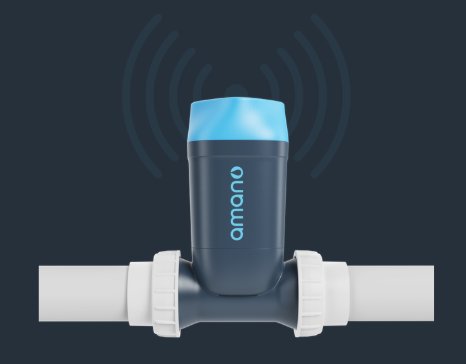
Amano answers this guide's questions as follows: scheduled reagent-based water tests for commercial pools, measuring free chlorine, combined chlorine, pH, and total alkalinity as direct chemistry values. Results are timestamped, alerts go out after completed tests, logs can be shared by QR code without an Amano login, and multiple properties are reviewable in one app.
Measured against this guide's questions: the method is scheduled reagent testing rather than immersed probes, the panel is the four-parameter core as direct chemistry values, connectivity is built-in cellular, and the record is timestamped with automated entries labeled as such. Amano supports the operator's manual testing and inspection program; it does not replace it, and it does not add chemicals.
If the job you wrote down matches that shape, the next step is a conversation about your properties.
See whether Amano fits
See how scheduled reagent testing answers the evaluation questions in this guide.
Quick FAQ
What is the main takeaway for choosing a monitoring system?
Work backward from the operating problem. Define the job, then evaluate measurement method, maintenance model, connectivity, alert-to-action workflow, and code fit, in that order.
Should I choose continuous sensors or scheduled testing?
Match the method to your staffing. Continuous sensors need calibration and cleaning to stay trustworthy; scheduled reagent tests deliver direct chemistry values on a timer. Both beat unverified assumptions.
Does a monitoring system replace manual testing?
No. Jurisdictions set their own required manual tests and inspections, and automated readings should be labeled as automated alongside them. Any system claiming otherwise deserves a very short pilot.
How long should a pilot run?
Long enough to cover real operating variety: at least a month including weekends, events, and a weather or load swing. The pilot should test the workflow, not just the hardware.
Talk through your pools with us
Thirty minutes, your properties, your water-testing setup. No obligation.
Primary sources and scope
Reviewed September 16, 2026. The sources below provide public-health and label context. Amano product details on this page come from current Amano materials.