Scope: This is general operating guidance. Follow your local health department and adopted code, facility SOP (standard operating procedure), chemical label, and equipment-manufacturer instructions.
Controller and Tester Are Not Synonyms
A controller, a sensor, and a tester are not three names for the same thing. The controller's question is "what should the feeder do right now?" The tester's question is "what is actually in this water?" Both questions matter, and they are answered by different instruments.
The confusion is understandable because controllers ship with sensors and display numbers that look like test results. But the controller's sensor exists to serve the control loop, not to produce defensible chemistry records. When the health inspector or the incident review asks for readings, the controller's display history and a verified chemistry test are not the same evidence.
What a Chemical Controller Does
A chemical controller reads sensor inputs, typically ORP and pH, and drives chemical feed equipment to hold setpoints. Done well, it smooths the chemistry curve: fewer swings, faster response to load, and steadier water through the operating day.
The controller's strength is stability through action. Its requirements are equally real: the sensors must be calibrated and cleaned, the interlocks must prevent feeding without flow, and a person must verify that the water agrees with the setpoints. A controller correcting against a drifting sensor manufactures confident, consistent, wrong water.
The maintenance obligation deserves emphasis because it is where controller installations quietly fail. ORP and pH sensors drift with age and fouling, and the controller has no way to know its own sensor is lying. Facilities that pair control with scheduled verification testing catch that drift in days; facilities that trust the loop blindly find out from the water. For the portfolio-wide picture of scheduled testing, alerts, and records, see our guide to commercial pool monitoring.
What an Automated Tester Does
An automated tester performs actual chemistry measurements on a schedule: drawing a sample, running a test method, and reporting concentrations. The output is verified data, free chlorine, combined chlorine, pH, total alkalinity, with timestamps, suitable for logs, trends, and inspection records.
The tester's strength is trustworthiness through measurement. It does not drive equipment or correct water; it tells the truth on a schedule and lets people decide. For records, verification, and oversight, that is precisely the job description. Automatic pool water testing covers the category in full.
Why ORP Control and Free-Chlorine Testing Can Disagree
Controllers typically run on ORP, and ORP is not a free-chlorine concentration. Chlorine is constantly being asked to do work, and ORP reads the water's oxidation potential, which moves with pH, temperature, and other chemistry, not just with disinfectant level.
This is the practical reason the two instruments coexist: a pool can hold its ORP setpoint while free chlorine ppm drifts outside its target, and only a direct chemistry test reveals the gap. The ORP vs. free chlorine guide details the relationship and why no universal conversion exists.
When You Need Both
The both-layers case is common: the controller keeps the water steady hour to hour, and the automated tester verifies the actual chemistry values on a schedule, catching sensor drift, documenting compliance, and feeding the record.
Think of it as steering and navigation. The controller steers continuously; the tester fixes the position. Facilities with heavy or variable bather load, strict documentation requirements, or multiple operators benefit most, because the verification layer catches what the control layer cannot see about itself.
Do Not Rip Out a Useful Controller Just to Add Testing
Facilities with working controllers should hear this plainly: automated testing is an addition, not a replacement. A well-maintained controller doing its job is an asset, and the verification layer makes it more valuable, not less.
The integration question is practical, not ideological: keep the controller steering, add scheduled testing for verified values and records, and use the comparison between them as a health check on both. When the tester and the controller disagree, the facility has learned something worth knowing before the inspector teaches it.
Practical Operator Workflow
Assign the instruments their roles in writing: the controller owns setpoint stability, the tester owns verified readings and the record, and people own calibration, verification, and correction decisions. Schedule the comparison: a weekly look at controller display versus tested values catches sensor drift early, and the record of those comparisons is itself good evidence of a well-run program.
Where Amano Fits
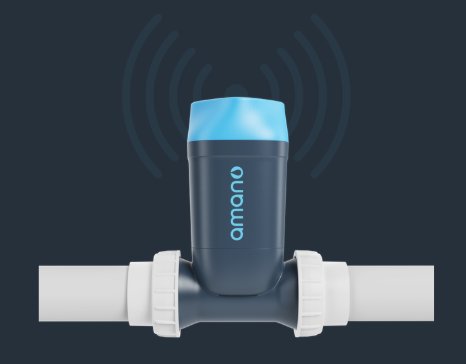
Amano supplies the independent verification layer: scheduled reagent-based water tests for commercial pools measuring free chlorine, combined chlorine, pH, and total alkalinity outside the control loop. Results are timestamped, alerts go out after completed tests, logs can be shared by QR code without an Amano login, and completed tests are reviewable in one app.
For facilities with chemical controllers, Amano is the verification layer: direct chemistry values on a schedule, independent of the control loop, with a timestamped record that documents what the water actually contained. Amano does not drive feed equipment, does not add chemicals, and does not ask you to remove a controller that is doing its job.
The controller keeps the water steady. Amano keeps the record honest. Both layers make the other one better.
Add the verification layer
See how scheduled reagent tests verify what your control loop is actually holding.
See How Amano Works Alongside Existing Pool Equipment Request a Demo
Quick FAQ
What is the main difference between a controller and an automated tester?
A controller drives chemical feed to hold setpoints. An automated tester measures and reports actual chemistry values on a schedule. One acts; the other verifies.
Can a controller's ORP reading serve as my chlorine record?
ORP is oxidation potential, not a free-chlorine concentration, and it moves with pH, temperature, and other chemistry. Jurisdictions typically require disinfectant concentrations, which need a direct test.
Does automated testing replace the controller?
No. Testing adds verified measurements and records; it does not drive equipment. Facilities with controllers keep them and gain a verification layer.
What if the controller and the tester disagree?
Investigate the measurement chain first: sensor condition and calibration on the controller side, test integrity on the tester side. The disagreement itself is valuable; it means the verification layer is working.
Talk through your pools with us
Thirty minutes, your properties, your water-testing setup. No obligation.
Primary sources and scope
Reviewed September 16, 2026. The sources below provide public-health and label context. Amano product details on this page come from current Amano materials.