Scope: This is general operating guidance. Follow your local health department and adopted code, facility SOP (standard operating procedure), chemical label, and equipment-manufacturer instructions.
Automation Is Not One Product Category
"Automated pool testing" gets marketed as a single thing, but the products under it do fundamentally different work: some measure continuously, some dose chemicals, some perform scheduled chemistry tests, and some only organize records. A controller, a sensor, and a tester are not three names for the same thing.
The category confusion costs real money. Facilities buy continuous sensing when they wanted scheduled chemistry values, or buy logging software when they wanted measurements. Naming the category correctly is the first step of a sane evaluation, and how to choose a monitoring system takes the full tour.
Option 1: Sensor Monitoring
Immersed sensors, typically pH and ORP electrodes, read the water continuously and stream values to a display or controller. The strength is density: a reading every second, trends in real detail, and immediate response to fast-moving conditions.
The costs are maintenance and meaning. Sensors drift, foul, and age, so they need calibration and cleaning on a schedule to stay trustworthy; why pool probes drift covers the physics. And ORP is a control signal, not a free-chlorine concentration, which matters every time someone asks for ppm. Sensor monitoring fits facilities with the discipline to maintain the sensors. For the portfolio-wide picture of scheduled testing, alerts, and records, see our guide to commercial pool monitoring.
Option 2: Automated Chemical Control
Chemical controllers use sensor inputs to drive feed equipment, closing the loop between measurement and dosing. They are the right tool where water chemistry must be held tight through heavy, variable load, and where staff cannot babysit feeders all day.
Control is a serious capability with serious requirements: the sensors feeding the controller must be trustworthy, the interlocks must work, and a human still owns verification. A controller correcting on a bad sensor reading manufactures bad water with great confidence. The controller vs. automated testing comparison breaks down where each fits.
Option 3: Automatic Reagent Testing
Automatic reagent testers draw or receive water samples on a schedule, run an actual chemical test with reagents, and record the resulting concentrations: free chlorine, combined chlorine, pH, total alkalinity, depending on the system. The readings are discrete chemistry values, not continuous electrical signals.
The strength is trustworthy direct measurement without immersed-probe calibration; the tradeoff is test frequency rather than a continuous stream, plus reagent supply and fluid-path maintenance. For facilities whose real need is "know the chemistry values reliably several times a day," scheduled reagent testing answers it directly. The probes vs. reagent testing guide goes deeper.
Option 4: Digital Logging and Workflow
The fourth category automates no chemistry at all: it automates the record. Digital logging systems capture readings, structure the fields, timestamp entries, and make history searchable and shareable.
Logging automation is underrated because it is unglamorous. The record is what inspections read, what supervisors review, and what protects the facility later, and automating its completeness removes a real daily failure mode. The best log is not the one with the fanciest dashboard; it is the one a stranger can understand without archaeology. Digital vs. paper logs weighs this category honestly.
Build the Stack Around the Problem
The categories combine. A facility might run a controller for chemical feed, scheduled reagent testing for verified chemistry values, and digital logging for the record, because each layer covers a different blind spot in the others.
The wrong way to build the stack is by shopping the word "automation." The right way is listing what must be measured, what must be controlled, and what must be proven, then assigning each to the category that actually does it. Layers on purpose, not by brochure.
Budget the layers by the pain they remove, not by the features they list. A facility whose incidents are all late-discovered chemistry gets the most from scheduled testing; one whose incidents are dosing oscillations gets the most from control. The incident history is the shopping list, and it never lies about what the facility actually needs.
Practical Operator Workflow
Before buying anything, run the facility's own failure history: what went wrong last season, what was caught late, what consumed labor, what the inspector noted. Each item names the category that would have prevented it. Sensors for speed, controllers for stability, reagent testing for verified values, logging for proof. Buy against your own incident list and every dollar has a job description.
Where Amano Fits
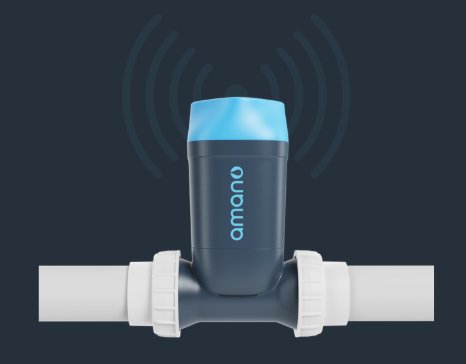
Amano is the reagent-testing option in this stack: scheduled water tests for commercial pools measuring free chlorine, combined chlorine, pH, and total alkalinity. Every result is timestamped, alerts go out after completed tests, logs can be shared by QR code without an Amano login, and the history serves as the logging layer.
Amano works alongside existing equipment: it does not control feeders, it does not add chemicals, and it does not replace the manual tests and inspections your jurisdiction requires. Facilities with controllers keep them; Amano adds verified chemistry values and a defensible record on top.
If your stack's gap is trustworthy scheduled chemistry measurements with a built-in record, that is the specific job Amano does.
See automatic reagent testing
See how scheduled reagent tests deliver verified chemistry values without immersed-probe upkeep.
Quick FAQ
What is the main takeaway on automating pool testing?
Automation is four categories, not one product: sensors, controllers, reagent testers, and logging. Match each real problem to the category that actually solves it.
Does automation replace the pool operator?
No. Every category still needs people: sensors need calibration, controllers need oversight, testers need reagent care, and all of them need humans who verify and correct.
Can these categories work together?
Yes, and good facilities layer them deliberately. Control equipment keeps water stable, scheduled reagent tests verify the chemistry values, and the logging layer proves all of it happened.
Is ORP the same as testing chlorine?
No. ORP measures oxidation potential and is useful for control, but it is not a free-chlorine concentration and cannot report combined chlorine at all.
Talk through your pools with us
Thirty minutes, your properties, your water-testing setup. No obligation.
Primary sources and scope
Reviewed September 16, 2026. The sources below provide public-health and label context. Amano product details on this page come from current Amano materials.