Scope: This is general operating guidance. Follow your local health department and adopted code, facility SOP (standard operating procedure), chemical label, and equipment-manufacturer instructions.
Paper's Superpower: It Is Simple
Paper has two genuine advantages: it is familiar and it does not need a password. A printed sheet on a clipboard works the day you print it, requires no training budget, no charger, and no login, and every inspector in the country knows how to read one.
Any honest comparison starts there. Digital systems do not win by being digital; they win or lose on whether the facility's real workflow gets easier. If the job is one small pool, one operator, and an inspector who wants the binder, paper is a defensible answer.
Paper's Weakness: It Stays Where You Left It
The downside of paper is equally obvious: it is usually sitting at the pool when the person who needs it is somewhere else. The regional manager asking about Tuesday's reading, the supervisor verifying a correction, the inspector requesting last quarter's records, all of them need the log to be somewhere the binder is not.
The workarounds are familiar: photos of log sheets texted to a supervisor, a second spreadsheet someone maintains "just in case," a photocopy for the office. Each workaround quietly creates a second, unofficial record, and unofficial records are where version confusion and lost context breed. For the portfolio-wide picture of scheduled testing, alerts, and records, see our guide to commercial pool monitoring.
What Digital Logs Change
Digital records can improve search, sharing, backup, and portfolio review. Required fields stop being a matter of discipline and become a property of the form. Timestamps applied by the system are harder to fudge and easier to trust than handwritten ones. Legibility stops being a variable entirely.
The deeper change is that the record exists in more than one place at once. The same entry can sit in front of the operator, the supervisor, and the regional manager simultaneously, which is something no clipboard has ever done. For the full breakdown of what belongs in the record itself, see what should be recorded in a commercial pool log.
The retrieval test is where digital quietly wins audits. When an inspector or an owner asks for a specific month, a digital system answers in seconds with the complete, legible record. Paper answers with a trip to the storage room and a hope that the binder made it back. Multiply that difference by every request in a year, and the format question answers itself.
Sharing Across a Portfolio
At portfolio scale, tiny inconsistencies become big operational noise. One property uses a paper sheet, another texts a photo, and a third swears the reading was fine this morning. None of those three records can be searched, compared, or audited against the others.
A shared digital process should make the normal pools boring and the exceptions obvious. That means consistent measurements, timestamps, and ownership across every property, with enough history to tell a new problem from a recurring one. The portfolio view is where digital stops being a convenience and becomes the operating model.
Automatic Entries and Human Entries
When a testing device writes log entries automatically, those entries should be labeled as automated measurements. Manual tests should remain distinguishable, so operators and inspectors know how each value was produced.
This is not bureaucracy for its own sake. The automated entry carries the device's testing schedule and method; the manual entry carries the operator's technique and judgment. Each can be audited on its own terms, and mixing them without labels destroys the ability to trust either. Some jurisdictions draw explicit lines between the two, which is one more reason provenance belongs in the record itself.
Compliance Is About Requirements, Not Format Hype
The format must satisfy the facility's actual recordkeeping requirements, and those come from the authority having jurisdiction, not from a product page. Some jurisdictions accept digital records readily; others still specify paper or specific formats.
Do not assume a digital format is accepted everywhere. Verify the local authority's requirements before replacing a required paper process, because "the app has it" is not an answer until the authority having jurisdiction agrees it is. The strongest posture is a digital system whose records would survive being read by a stranger, plus whatever format the local rule explicitly demands.
The Real Comparison Is the Whole Workflow
The honest comparison between paper and digital is not the artifact; it is the full workflow: fill in the reading, file the record, find it later, share it on request, and produce it under audit. Paper is cheapest at step one and most expensive at every step after.
That is why the decision should be made on the facility's actual week, not on a feature list. Count how often the record gets read by someone who was not standing at the pool when it was written. The higher that number, the more the clipboard is costing you.
Where Amano Fits
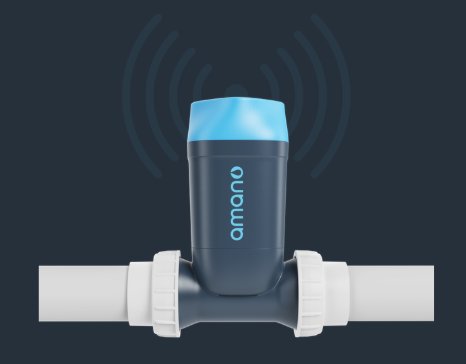
Amano runs scheduled reagent-based water tests for commercial pools, measuring free chlorine, combined chlorine, pH, and total alkalinity on a schedule the team sets. Every completed test writes its own timestamped log entry automatically, alerts go out after completed tests, and logs can be shared by QR code without an Amano login.
For the paper-versus-digital question, Amano's practical contribution is that the automated layer never forgets a field. Each scheduled test lands in the record with the parameter, the value, and a system timestamp, labeled as an automated reading, and reviewable across multiple properties in one app. The operator's manual tests and inspections stay in the workflow, clearly distinct, exactly as this guide recommends.
Amano supports the operator's process. It does not add chemicals, and it does not replace testing, verification, or recordkeeping duties imposed by the local authority having jurisdiction.
See the digital chemistry log
See how scheduled reagent tests write their own timestamped, shareable chemistry log entries.
Quick FAQ
Can digital logs fully replace paper?
That depends on local requirements and facility policy. Verify acceptance with the authority having jurisdiction before retiring any required paper process. Many facilities run digital as the working system while keeping whatever paper the local rule still names.
Are automatically generated entries acceptable in an inspection?
Automated readings should be clearly labeled as automated, and manual tests kept distinguishable. Acceptance varies by jurisdiction, so confirm with the local authority. Clear provenance is what makes either kind of entry trustworthy.
What is the biggest real-world failure mode of paper logs?
The record existing only at the pool. The information is captured but unusable: unsearchable, unshareable, and one wet afternoon away from illegible. The reading happened; the recordkeeping did not.
Does a digital log system require site Wi-Fi?
Not necessarily. Amano, for example, reports over built-in cellular connectivity rather than the property's Wi-Fi, which matters in equipment rooms where Wi-Fi is unreliable. See <a href="/pool-water-testing-no-wifi/">pool water testing without Wi-Fi</a> for that scenario.
Talk through your pools with us
Thirty minutes, your properties, your water-testing setup. No obligation.
Primary sources and scope
Reviewed September 16, 2026. The sources below provide public-health and label context. Amano product details on this page come from current Amano materials.