Scope: This is general operating guidance. Follow your local health department and adopted code, facility SOP (standard operating procedure), chemical label, and equipment-manufacturer instructions.
Start With Your Jurisdiction
The first rule is wonderfully unglamorous: follow the code that actually applies to the facility. CDC's Model Aquatic Health Code is useful national guidance, but it is not federal pool law, and jurisdictions can adopt, modify, or ignore portions of it.
Build the log around the authority having jurisdiction first, then around the facility's own operating plan. Anything a national guide tells you to record is a candidate; anything your local code tells you to record is a requirement. The log format that survives an inspection is the one designed backward from the local rule.
Chemistry Readings
Every chemistry entry should record the specific parameter and its value, not a generic label. "Chlorine: 2.0" is ambiguous; free chlorine, combined chlorine, and total chlorine are different measurements with different corrective paths, and the log should say which one it holds.
For the core panel, that means free chlorine, combined chlorine, pH, and total alkalinity recorded as separate, named values, plus any additional parameters the jurisdiction or facility requires. The commercial pool chemistry guide covers what each of those values tells you. For the portfolio-wide picture of scheduled testing, alerts, and records, see our guide to commercial pool monitoring.
Time, Date, and Body of Water
A reading without a timestamp is half a record. The time is what turns a value into a trend: it connects chemistry to bather load, programming, feed schedules, and weather, and it is the only way to tell a slow slide from a sharp event.
At multi-pool properties, the body of water matters just as much. Lap pool, spa, and kiddie pool entries must be distinguishable at a glance, because a spa reading filed under the main pool is not a small error; it is a wrong record waiting for an inspector or a lawyer to find it.
Corrective Actions
When a result is out of range, the log should record what happened next: the action taken under the facility procedure, who took it, when, and the follow-up result that verified it. A log full of bad numbers with no responses is not a complete operating story.
The corrective-action record is what makes the log a management tool instead of a diary. With it, a supervisor can audit response quality and response time. Without it, the log documents that problems happened and nothing more, which is the worst possible posture in an inspection.
Equipment and Maintenance Notes
Chemistry does not move on its own, so the log should capture the equipment context that explains it: feed pump service, backwashing, filter work, probe or reagent maintenance, leaks, and major water additions.
These notes are what make future troubleshooting possible. When pH starts drifting three weeks after a feed pump service, the maintenance note is what connects the two events. Without it, every recurring problem gets rediscovered from scratch, and the log becomes a list of symptoms instead of a diagnostic tool.
A practical example: free chlorine starts sagging at a property that has been stable for months. With the maintenance notes in the same record, the answer is one scroll away: the feeder was serviced last Tuesday and the pump speed changed. Without them, the team starts testing theories instead of reading history.
Who Performed the Work
Each entry needs an owner: the person who ran the test, or a clear label that a device produced it automatically. Accountability aside, this field is practically useful, because technique questions and training needs are impossible to trace without knowing who did what.
Automated entries should be labeled as automated. The record should never leave an inspector guessing whether a person or a machine produced a value, and it should never let one masquerade as the other.
Make the Record Readable Six Months Later
A useful record answers the questions people ask later: what was measured, when, where, by whom or by what system, what was out of range, and what happened next. The best log is not the one with the fanciest dashboard; it is the one a technician, regional manager, or inspector can understand without archaeology.
The test is simple: pick a random day from last quarter and hand the record to someone who was not there. If they can reconstruct what the water did and what the team did about it, the log works. If the story needs a translator, the fields are failing. For how these records play out over years, see how long commercial pool records should be kept.
Practical Operator Workflow
Define the required fields once, in writing, and make every entry hit all of them. A rushed closing shift should produce the same complete record as a careful morning one, because the fields carry the completeness, not the person's memory. Supervisors review for closure: every out-of-range reading gets a corrective action, and every corrective action gets a follow-up result. An open loop older than a day is a task, not a footnote.
Where Amano Fits
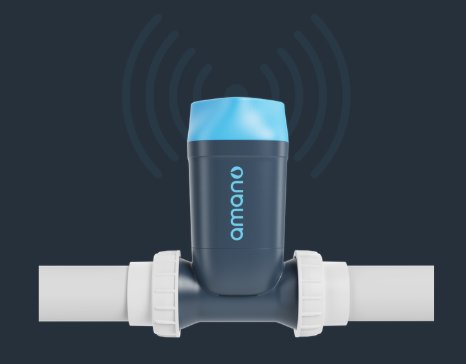
Amano performs scheduled reagent-based water tests for commercial pools and records each result automatically: free chlorine, combined chlorine, pH, and total alkalinity, with a system timestamp on every entry. Alerts go out after completed tests, and logs can be shared by QR code without an Amano login.
For the field list in this guide, the practical value is that the chemistry columns never go blank. Scheduled tests record the four-parameter core with system-applied timestamps, alerts go out after completed tests, and logs can be shared by QR code without an Amano login. The human fields, including corrective actions, inspections, and maintenance notes, stay in the team's hands where they belong.
Amano supports the operator's process. It does not add chemicals, and it does not replace testing, verification, or recordkeeping duties imposed by the local authority having jurisdiction.
See automatic chemistry records
See how scheduled reagent tests record the four-parameter core with system timestamps, no manual entry.
See How Amano Automatically Records Chemistry Tests Request a Demo
Quick FAQ
What is the minimum a commercial pool log should capture?
At minimum: the readings with their parameter names, date and time, the responsible person or system, and the corrective actions and follow-up results the facility and jurisdiction require. The authority having jurisdiction defines the mandatory list.
Should free and combined chlorine be logged separately?
Yes. They are different measurements with different corrective paths. Logging only "chlorine" loses the information that explains bather-load patterns and chloramine problems. The <a href="/free-chlorine-vs-combined-chlorine/">free vs. combined chlorine</a> guide covers the difference.
Do automated readings belong in the same log as manual ones?
They can share a system, but the source of each reading should stay visible. Label automated entries as automated so operators and inspectors know how every value was produced.
How detailed should corrective-action notes be?
Detailed enough that someone who was not there can reconstruct the response: what was done, under which procedure, by whom, when, and what the verification test showed. One sentence per step usually does it.
Talk through your pools with us
Thirty minutes, your properties, your water-testing setup. No obligation.
Primary sources and scope
Reviewed September 16, 2026. The sources below provide public-health and label context. Amano product details on this page come from current Amano materials.