Scope: This is general operating guidance. Follow your local health department and adopted code, facility SOP (standard operating procedure), chemical label, and equipment-manufacturer instructions.
The Sticker Price Is Only Line One
Buying pool technology gets easier when you stop comparing feature bingo cards and start comparing total cost of ownership. The sticker price buys the box. The ownership cost includes everything the box needs to keep producing trustworthy data for years.
A fair evaluation puts five lines on the page before comparing anything: hardware and installation, subscriptions and connectivity, consumables and maintenance, labor added or removed, and downtime risk. The sections below walk each line.
Hardware and Installation
Hardware cost varies by measurement method: immersed sensor assemblies, controllers, and automatic reagent testers occupy different price tiers, and installation ranges from mounting a box to cutting into plumbing.
Ask what installation actually involves for your mechanical room: plumbing work, electrical supply, flow requirements, and who performs it. A device that installs inline on the return line has a different first-week cost than one needing a dedicated bypass loop and an electrician, and retrofit realities at older facilities belong in the quote, not in the surprise column. For the portfolio-wide picture of scheduled testing, alerts, and records, see our guide to commercial pool monitoring.
Subscriptions and Connectivity
Most monitoring systems carry an ongoing software or connectivity subscription, and the ongoing line often exceeds the hardware line within a few years. Ask what the subscription covers: data hosting, alerting, app access, cellular service, support, and what happens to your data and your device if the subscription lapses.
Connectivity has its own cost dimension. Systems on property networks inherit IT involvement; cellular-connected systems typically bundle connectivity into the subscription. Compare the all-in monthly figure, and check whether per-property pricing scales sanely across your portfolio. The connectivity scenarios are mapped in pool water testing without Wi-Fi.
Probe, Reagent, and Consumable Costs
Every measurement method consumes something. Sensor systems consume probes, calibration solutions, and cleaning supplies, with probes typically replaced on a regular cycle. Reagent systems consume reagents and fluid-path components. Both are legitimate costs; both belong in the model.
Get the consumable schedule in writing: what gets replaced, at what interval, at what price, and whether replacement needs a service visit or a staff member's ten minutes. The probe lifespan guide details what sensor maintenance really costs over time, and the comparison between methods is in probes vs. reagent testing.
Labor and Travel
This is the line where monitoring usually pays for itself, and the line vendors most often exaggerate. Count honestly: technician minutes per manual test, trips made only to test, data entry and transcription time, supervisor review, and repeat visits for problems caught late. The true cost of manual testing builds that baseline in detail.
Then subtract only the labor the system genuinely removes. Scheduled automated tests remove manual logging of routine readings and some discovery visits; they do not remove physical inspection, correction, or required manual checks. The savings are real when the ledger is honest, and fictional when it includes work nobody was actually doing.
Downtime and Troubleshooting
Every system fails eventually; the cost question is how it fails. Does it fail loudly with an alert, or silently with stale data? What does troubleshooting cost, who performs it, and how fast is support?
Silent failure is the expensive kind because it corrupts the record while looking healthy. Ask for the failure modes in writing and the support response commitment alongside them. A monitoring system you cannot trust produces negative value: you pay for it and you still cannot believe it.
Build a Five-Line Total-Cost Model Before Comparing
Do the math on the whole workflow before comparing vendors: hardware and installation, subscriptions and connectivity, consumables and maintenance, labor added or removed, and downtime risk. Five lines, real numbers from your own operation, three-year horizon.
The model's output is rarely the cheapest system; it is the system whose costs you understand. That understanding is what survives budget season, board questions, and the third year of ownership, which is when monitoring systems either become infrastructure or become shelf decorations.
Practical Operator Workflow
Assign the cost model an owner who updates it with real figures: actual consumable spend, actual alert-to-response times, actual labor hours after the first quarter of use. Review the model annually, because the facility's baseline shifts as the system removes work. The day the model shows the system paying for itself in removed repeat visits and caught-early problems, the procurement debate ends with evidence instead of enthusiasm.
Where Amano Fits
Amano's cost profile fits the model above: scheduled reagent-based water tests for commercial pools measuring free chlorine, combined chlorine, pH, and total alkalinity. Results are timestamped, alerts go out after completed tests, logs can be shared by QR code without an Amano login, and the portfolio is reviewable in one app.
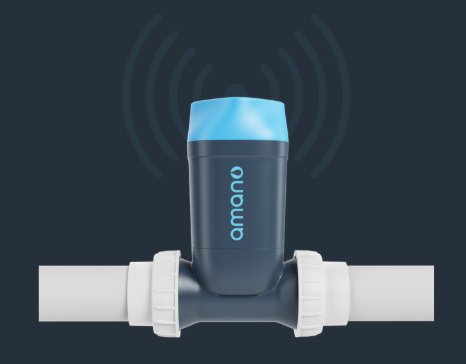
For the cost model in this guide: Amano installs inline on the return line, reports over built-in cellular so connectivity carries no site IT cost, and removes the manual logging and discovery labor of routine testing while leaving verification and correction with your team. The five-line model is exactly the conversation to have, with your numbers, about your properties.
Amano supports the operator's process. It does not add chemicals, and it does not replace testing, verification, or safety duties imposed by the local authority having jurisdiction.
Talk with Amano about monitoring
Bring your five-line model: see how scheduled reagent testing fits your properties and budget.
Talk With Amano About Commercial Pool Monitoring Request a Demo
Quick FAQ
What is the main takeaway on monitoring system cost?
The sticker price is line one. Count hardware, subscriptions, consumables, labor added or removed, and downtime risk over three years, with numbers from your own operation.
Is a subscription model worth it versus owning outright?
Compare what the subscription includes: data hosting, alerting, cellular connectivity, app access, and support. The all-in monthly figure, multiplied over three years, is the honest comparison against one-time purchases plus their hidden ongoing costs.
How do I estimate labor savings honestly?
Measure your real baseline first: minutes per test, test-only trips, data entry time, and last season's late-caught problems. Subtract only the work the system actually removes. Your own ledger beats any vendor projection.
What is the most commonly missed cost?
Silent downtime and probe or reagent maintenance. Both are small until they are not, and both belong in writing before the purchase order.
Talk through your pools with us
Thirty minutes, your properties, your water-testing setup. No obligation.
Primary sources and scope
Reviewed September 16, 2026. The sources below provide public-health and label context. Amano product details on this page come from current Amano materials.