Scope: This is general operating guidance. Follow your local health department and adopted code, facility SOP (standard operating procedure), chemical label, and equipment-manufacturer instructions.
The Test Kit Is Not the Expensive Part
The cheapest line item is rarely the whole cost. A manual test kit costs little and works well, which is exactly why manual testing's real expense hides elsewhere: in the labor wrapped around every reading.
The kit performs one chemistry measurement. Everything else, driving to the pool, running the test, recording it, filing it, reporting it, and acting on it, is people time. Pool operations have many hidden workflow costs, and manual testing collects most of them into one deceptively cheap-looking line.
Count Minutes, Not Just Materials
Start with the time ledger: minutes per test, tests per visit, visits per week, multiplied by the hourly cost of the person doing them. Include the setup and cleanup around each test, because reagents, rinsing, and disposal are part of the measurement.
Then add the review layer: supervisor time reading the logs, chasing missing entries, and reconciling versions. A reading that takes five minutes to produce and fifteen minutes to shepherd through the organization is a twenty-minute reading wearing a five-minute price tag. For the portfolio-wide picture of scheduled testing, alerts, and records, see our guide to commercial pool monitoring.
Travel Changes the Equation
For service routes and multi-property operators, the drive is often the biggest cost of all. A test that requires a dedicated trip carries the round-trip drive, the vehicle cost, and the opportunity cost of the stops not made.
This is where testing frequency and travel multiply each other. A jurisdiction or operating plan that wants two readings a day at a property thirty minutes apart is not asking for two tests; it is asking for two trips. Any fair cost model counts the wheels, not just the droplets.
Route density is the multiplier most cost models miss. A property that sits alone forty minutes from the next stop carries a very different per-test cost than one inside a tight route, which is why the same automation decision can be obvious for one site and marginal for another. Model travel per property, not per portfolio average.
Data Entry Is Still Labor
Manual testing rarely ends at the water. The reading gets written down, then transcribed: into a spreadsheet, a log system, a report to a supervisor or owner. Each transcription is paid labor with an error rate attached.
Duplicate entry also creates reconciliation work, the uniquely frustrating task of figuring out which of two disagreeing records is right. Single-capture workflows remove both the entry cost and the reconciliation cost in one move, which is why digital vs. paper pool logs is really a labor comparison.
Blind Spots Have an Operational Cost
Manual testing shows the water at the moment of the test. Between tests, the water does whatever it wants, and what it does sometimes becomes an emergency: the after-hours callout, the weekend closure, the contamination response that a mid-day reading would have prevented.
Blind-spot cost is real but irregular, which makes it easy to ignore in a budget and painful in a season. The fair way to count it is from the facility's own history: how many callouts, closures, and escalation visits last year, and how many of them a timely reading would have caught early. Why free chlorine keeps dropping is a good example of a problem that is cheap at 2 PM and expensive at 9 AM the next day.
How to Build a Fair Automation ROI Model
Do the math on the whole workflow: technician minutes, drive time, duplicate data entry, supervisor review, consumables, troubleshooting, and repeat trips. Then separate labor a system actually removes from labor it merely moves, and keep the claims qualitative until your own numbers prove them.
A fair model also credits the non-labor returns: better documentation at inspection time, earlier warnings on drifting chemistry, and a searchable history for recurring problems. None of those need invented dollar figures; they show up in the facility's own incident and labor records within a season, which is the only evidence worth trusting anyway.
Practical Operator Workflow
Build the baseline before buying anything: one month of actual testing minutes, trips, and data-entry time per property, plus last season's callout count. That baseline is the only honest denominator for any automation claim, vendor-made or self-made. Re-measure the same numbers after any change, and let the facility's own ledger settle the argument. The labor reduction guide covers which line items typically move first.
Where Amano Fits
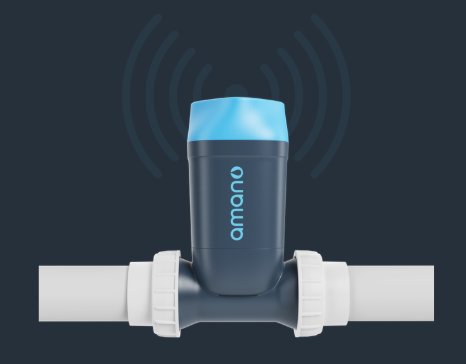
Amano prices against the workflow, not the kit: scheduled reagent-based water tests for commercial pools measure free chlorine, combined chlorine, pH, and total alkalinity on the team's schedule. Results are timestamped and logged automatically, alerts go out after completed tests, and logs can be shared by QR code without an Amano login.
For the cost model in this guide, Amano removes specific countable tasks from the ledger: the trips made only to test, the manual logging of routine readings, and the supervisor's record-hunting across properties. Built-in cellular reporting means the data travels without a site network, and completed tests across multiple properties are reviewable in one app. The physical craft, verification, correction, inspection, stays with your team, which is what keeps the ROI honest.
Amano supports the operator's process. It does not add chemicals, and it does not replace testing, verification, or safety duties imposed by the local authority having jurisdiction.
Compare manual and automated testing
See how scheduled reagent tests change the per-property testing ledger, task by task.
Compare Manual Testing With Amano's Automated Tests Request a Demo
Quick FAQ
What is the main takeaway on the cost of manual testing?
Count the whole workflow, not the test kit. Labor, travel, duplicate entry, supervisor review, and blind-spot incidents usually outweigh materials by a wide margin.
Does automation replace the pool operator?
No. Automation can add measurements, records, alerts, and history, but physical inspection, correction, and jurisdiction-required manual tests remain human work.
How do I estimate the cost at my facility?
Measure one month of real numbers: minutes per test, tests and trips per property, data-entry time, and review time, plus last season's callout history. Your own ledger beats any industry average.
Is manual testing ever the right choice?
Yes. It remains essential for verification, for parameters outside an automated panel, and wherever the jurisdiction requires it. The cost question is about which tests need a trip and which do not.
Talk through your pools with us
Thirty minutes, your properties, your water-testing setup. No obligation.
Primary sources and scope
Reviewed September 16, 2026. The sources below provide public-health and label context. Amano product details on this page come from current Amano materials.