Scope: This is general operating guidance. Follow your local health department and adopted code, facility SOP (standard operating procedure), chemical label, and equipment-manufacturer instructions.
Do Not Automate the Human Out of the Job
Efficiency is not about doing less pool care. It is about doing less paperwork per unit of pool care. The physical craft, testing, verifying, correcting, inspecting, is the job, and any "efficiency" that skips it is just deferred trouble with a timesheet.
The right framing for labor reduction is support: give the same skilled people better information earlier, strip out the duplicate administrative work, and let their hours go to the water instead of the clipboard. Facilities that cut the craft lose the water; facilities that cut the duplication keep both.
Remove Duplicate Recordkeeping
Duplicate recordkeeping is the quietest labor leak in pool operations: the reading gets written on a sheet, then typed into a spreadsheet, then texted to a supervisor, then re-entered into a report. One measurement, four hand-copying events, each with its own error rate.
The fix is single-entry discipline: capture the reading once, in the system of record, and let every downstream use read from there. When what belongs in the log is captured at the source, the transcription jobs disappear, and so do the mismatched versions nobody can reconcile. For the portfolio-wide picture of scheduled testing, alerts, and records, see our guide to commercial pool monitoring.
Arrive Knowing What the Water Needs
A technician who arrives blind spends the first part of every visit discovering the state of the water. A technician who arrives with recent timestamped readings and alerts spends that same time acting on it.
This is where scheduled automated testing changes the labor math: the discovery phase of the visit happens before the visit. The tech walks in already knowing free chlorine sagged overnight or that pH has been climbing all week, and the visit starts at the response instead of the diagnosis.
The preparation effect compounds across a route. Ten visits that each skip twenty minutes of discovery return more than three hours of technician time per day, which is nearly half a route stop recovered without driving any faster. The information did not replace the visit; it made the visit start at the useful part.
Prioritize Exception Visits
Not every pool needs the same visit every day. Exception-driven scheduling sends hours to the properties the data flags and lets stable properties run on routine, which is where the real labor recovery lives.
The discipline that makes this safe is verification: exceptions get checked by a person, and stable status gets confirmed by scheduled tests rather than by assumption. Skipping visits on untested water is not efficiency; skipping visits on continuously documented water is. The exception model is covered in multi-pool monitoring.
Exception scheduling also changes what a technician's day feels like. Instead of eight identical drive-test-log stops, the day becomes a mix of confirmed-routine properties and flagged sites with real problems to solve. Morale follows the work: skilled people prefer days where their judgment matters over days where they collect normal numbers.
Standardize Recurring Tasks
Labor leaks hide in variation: three technicians testing three ways, logging in three formats, and escalating by three different rules. Standardizing the recurring tasks, the test sequence, the log fields, the escalation path, removes the friction tax on every visit.
Standardization also makes labor measurable. Once every site runs the same workflow, visit duration and exception rates become comparable, and the outliers start explaining themselves. Document the result and the maintenance action every time; future-you, or the next technician, will need the context.
Measure Labor Saved Without Creating Risk
Do the math on the whole workflow: technician minutes, drive time, duplicate data entry, supervisor review, consumables, troubleshooting, and repeat trips. Then separate the labor a system actually removes from the labor it merely moves.
The honest ledger has two columns: hours eliminated, like manual logging of scheduled tests or discovery time at arrival, and hours that must stay, like physical inspection and correction. Claims of savings that come from the second column are risk wearing a savings costume. The full cost picture is in the true cost of manual testing.
Practical Operator Workflow
Track three numbers per property per month: visit hours, exception count, and repeat-visit rate. Falling visit hours with flat exceptions is efficiency arriving. Falling visit hours with rising exceptions is coverage eroding, and the difference between those two pictures is the entire point of measuring. Review the trio monthly by property, and let the data argue about staffing instead of the loudest voice in the meeting.
Where Amano Fits
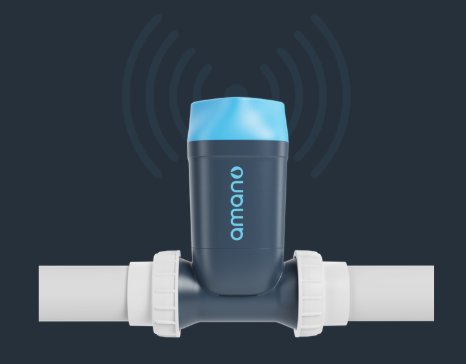
Amano removes the repetitive half of routine testing: scheduled reagent-based tests measure free chlorine, combined chlorine, pH, and total alkalinity for commercial pools, log every result with a timestamp, and send alerts after completed tests. Logs can be shared by QR code without an Amano login.
For labor reduction, the practical value is the removal of specific, countable tasks: the manual logging of routine tests, the discovery phase at the start of each visit, and the supervisor's record-hunting across properties. Completed tests are reviewable in one app, so the regional review that took an afternoon of phone calls takes minutes. The craft stays; the transcription goes.
Amano supports the operator's process. It does not add chemicals, and it does not replace testing, verification, or safety duties imposed by the local authority having jurisdiction.
Automate the testing and logging
See how scheduled reagent tests remove the manual logging and discovery work from every visit.
See How Amano Automates Chemistry Testing and Logs Request a Demo
Quick FAQ
What is the main takeaway for reducing pool labor?
Remove duplicate work, not skilled work. Single-entry recordkeeping, arrival with current data, exception-driven visits, and standardized recurring tasks are where the hours actually come from.
Does automation replace pool technicians?
No. Automation can add measurements, records, alerts, and history, but physical inspection, correction, and required manual tests stay with people. The goal is technicians spending their time on the water.
Where do facilities usually lose the most labor?
Duplicate data entry, discovery time at the start of blind visits, repeat trips for problems caught late, and supervisors reconstructing records. None of those are chemistry; all of them are workflow.
How do I measure whether labor is really saved?
Track visit hours, exception counts, and repeat-visit rates per property. Savings are real when hours fall while exceptions stay caught and closed, and fictional when hours fall because things stop being seen.
Talk through your pools with us
Thirty minutes, your properties, your water-testing setup. No obligation.
Primary sources and scope
Reviewed September 16, 2026. The sources below provide public-health and label context. Amano product details on this page come from current Amano materials.