Scope: This is general operating guidance. Follow your local health department and adopted code, facility SOP (standard operating procedure), chemical label, and equipment-manufacturer instructions.
Portfolio Scale Changes the Job
One property's pool problem is a task. Fifty properties' pool problems are a system-design question: who sees what, in what format, how often, and what happens next. At portfolio scale, the failure mode is no longer a missed reading; it is a missed reading nobody was assigned to see.
The portfolio approach inverts the instinct to check everything. Instead, every property reports into one structure, the healthy ones stay boringly green, and human attention flows to the exceptions with the context attached. That is an operating model, not a software feature, and the data layer is just what makes it possible.
Standardize the Chemistry View
Portfolio review only works when every property reports the same core parameters the same way: free chlorine, combined chlorine, pH, and total alkalinity, with consistent units, timestamps, and naming. The moment one site reports differently, every comparison becomes a translation exercise.
Standardization is a policy decision with a data consequence. Define the core panel, the units, the required fields, and the exception definitions once, and hold every property to them. The commercial pool chemical levels guide covers the core panel, and the commercial pool chemistry guide explains what each parameter tells you. For the portfolio-wide picture of scheduled testing, alerts, and records, see our guide to commercial pool monitoring.
Manage Exceptions Instead of Inboxes
Portfolio managers drown in per-property updates: emails, texts, photos of log sheets, weekly recaps nobody has time to read. The exception model replaces the inbox with a short list of items that need a decision, each with an owner and a due state.
The discipline is in the threshold design. Exceptions should be rare enough to act on and common enough to trust: a value out of range, a missed scheduled test, a corrective action without a follow-up result. Everything else stays available but silent. Good monitoring makes normal pools boring, and boring is the point.
Give Vendors and Staff the Same History
Most multifamily portfolios blend onsite staff with outside pool vendors, and the blended model fails at the information boundary: the vendor has their records, the property has theirs, and neither matches.
A shared timestamped chemistry history ends the two-records problem. Both parties read the same readings, corrective actions attach to the excursions they addressed, and the weekly accountability conversation moves from "whose number is right" to "what does the trend need." Shared history is also what makes vendor performance reviewable over a season instead of anecdotally.
Spot Recurring Property Problems
The portfolio view earns its keep on recurrence: the property that fights combined chlorine every weekend, the one whose pH climbs all summer, the one whose vendor visits never quite close the loop. None of those patterns are visible inside one property's week; all of them are obvious in a portfolio trend.
Recurring patterns deserve root-cause work, not repeated correction. When the same exception fires at the same property for the third month, the question shifts from "who responds" to "what is different about this site," and the portfolio history is the evidence file for that investigation.
The recurrence report also protects good properties from bad averages. A portfolio-wide number can hide one struggling site behind forty-nine healthy ones, and the site-level trend is what keeps the problem property from quietly setting the whole portfolio's maintenance budget on fire.
Roll Out Without Creating an IT Project
Portfolio technology rollouts fail on deployment friction: site networks, passwords, IT approvals, and equipment rooms with no signal. The winning rollout treats connectivity as a site survey item, not an assumption, and prefers devices that carry their own data path.
Cellular-connected testing removes the property network from the critical path, which is why it shows up so often in successful multifamily deployments. Whatever the transport, the rollout checklist should include a signal check at the actual mounting location and a fallback plan per site; pool water testing without Wi-Fi covers the scenario. For single-community context, the apartment pool monitoring guide is the companion read.
Practical Operator Workflow
Run the portfolio week from three artifacts: the exception list, owned and aging; the recurrence report, which properties repeat which exceptions; and the closure audit, which corrective actions lack follow-up results. Monday sets owners, Friday audits closure, and monthly review asks the recurrence report its hard questions. The portfolio manager's craft is pattern recognition across communities, and these three artifacts are where the patterns live.
Where Amano Fits
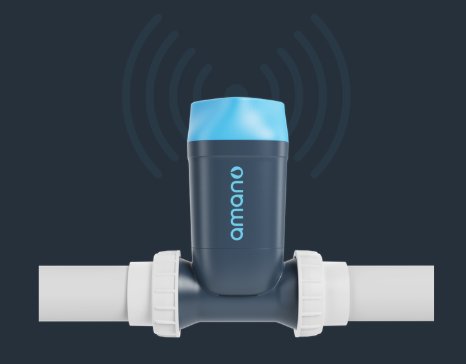
Amano standardizes the portfolio's chemistry data at the source: scheduled reagent-based tests for commercial pools measuring free chlorine, combined chlorine, pH, and total alkalinity. Results are timestamped, alerts follow completed tests, and logs can be shared by QR code without an Amano login.
For multifamily portfolios, the practical value is a uniform chemistry layer across every community: the same four-parameter panel, timestamped, with built-in cellular so no property's Wi-Fi decides whether a site reports. Regional teams get the exception view, the shared history, and the recurrence evidence in one place, and owners asking about any property get a shareable record instead of a phone call chain.
Amano supports the operator's process. It does not add chemicals, and it does not replace testing, verification, or safety duties imposed by the local authority having jurisdiction.
See Amano for multifamily portfolios
See how scheduled reagent tests give every community the same timestamped chemistry data layer.
Quick FAQ
What is the main takeaway for multifamily pool monitoring?
Standardize the data, manage exceptions instead of inboxes, and give vendors and staff one shared timestamped history. Portfolio scale is an information-design problem, and the chemistry is the easy part.
Does automation replace the pool operator?
No. Automation adds measurements, records, alerts, and history. Physical inspection, correction, and jurisdiction-required manual tests remain human work at every property.
How do we handle properties with different equipment and vendors?
Standardize the reporting layer, not the plumbing. Every site can keep its own equipment and vendors as long as the core chemistry data lands in the same format in the same place.
What is the first sign a portfolio monitoring setup is working?
The weekly review gets shorter. Exceptions arrive with owners and context, recurring problem properties identify themselves in the trends, and nobody asks "did anyone check that pool" in the meeting.
Talk through your pools with us
Thirty minutes, your properties, your water-testing setup. No obligation.
Primary sources and scope
Reviewed September 16, 2026. The sources below provide public-health and label context. Amano product details on this page come from current Amano materials.