Scope: This is general operating guidance. Follow your local health department and adopted code, facility SOP (standard operating procedure), chemical label, and equipment-manufacturer instructions.
Do Not Prepare for Inspections; Operate Ready
The difference shows in the calendar. Facilities that prepare have an inspection season: a burst of log cleanup, deferred maintenance, and frantic printing. Facilities that operate ready have none of that, because there is nothing to burst.
The operating-ready posture is also cheaper. Catching a chemistry drift on the day it starts costs one correction; catching it at inspection-preparation time costs three weeks of explanation. Everything else in this guide is a way of making "ready" the default state instead of a special event.
Know the Local Checklist
Inspection requirements vary by jurisdiction, and the inspector's own form is the best study guide available. CDC's Model Aquatic Health Code is useful national guidance, but it is not federal pool law; jurisdictions adopt, modify, or ignore portions of it, so the local adopted code and inspection form define what "ready" means for a given property.
Get the actual form the local authority uses, map every line to a facility routine or record, and assign each one an owner. Lines with no owner are the findings waiting to happen. The commercial pool inspection checklist guide turns that mapping into a daily list. For the portfolio-wide picture of scheduled testing, alerts, and records, see our guide to commercial pool monitoring.
Keep Records Boringly Complete
Inspectors read records the way auditors read books: looking for gaps. A complete log has no missing days, no mystery entries, no out-of-range readings without a documented response, and no corrective actions lacking a follow-up result.
"Boringly complete" is a discipline, not a talent. Required fields, consistent parameter names, timestamps, and a closed loop on every exception. The guide to what belongs in a commercial pool log covers the field list, and the test is always the same: a stranger should be able to reconstruct any day without interviewing anyone.
Fix Small Issues While They Are Small
Every facility has a list of small things: the gate that latches most of the time, the depth marker that is mostly legible, the chemical shelf that is almost properly separated. Inspections collect these. Operating-ready facilities fix them on discovery, because the cost of fixing a latch today is trivial next to the cost of explaining it in a report.
The mechanism is simple: any staff member can flag a small issue, and flagged issues have an owner and a deadline. The list stays short because items leave it quickly, not because items are never added.
The monthly pattern to watch is the repeat flag: the same small issue flagged three times means the fix is not sticking, and the answer is a real repair, not a fourth flag. Small issues that age into repeat findings are the easiest inspection points to lose, because the record itself shows the facility knew.
Make Handoffs Obvious
More inspection findings are born in shift handoffs than in any equipment room. The opening operator does not know what the closing operator saw, the weekend tech does not know what the weekday tech corrected, and the record exists only in someone's memory.
The fix is a handoff format so standard it is hard to skip: open items, pending retests, equipment quirks, and anything unusual, in writing, every shift. When the handoff lives in the same log as the chemistry, the next shift starts informed instead of surprised.
The strongest handoff cultures add one more rule: no verbal-only exceptions. Anything unusual said out loud also lands in the record, because the person who needs it is often not the person who heard it. The rule feels heavy for one shift and indispensable by the first weekend rotation.
Use Technology as Evidence, Not as a Substitute
Automated testing and digital logs produce strong evidence: timestamped readings, alert histories, and complete trends. They do not replace the physical inspection items, the manual tests a jurisdiction requires, or the operator's judgment about what a reading means.
The inspection-winning combination is technology for coverage plus people for judgment, with the record showing both. A facility that can show scheduled automated readings, labeled as automated, alongside documented manual verification is presenting exactly the layered diligence inspectors are trained to look for.
Practical Operator Workflow
Pick one ordinary day per month and audit it like an inspector: pull the readings, the corrective actions, the follow-up results, the checklist completions, and the postings. Anything that takes more than a few minutes to produce is a readiness gap, and the gap gets an owner before the audit ends. Readiness measured monthly never becomes readiness panicked about quarterly.
Where Amano Fits
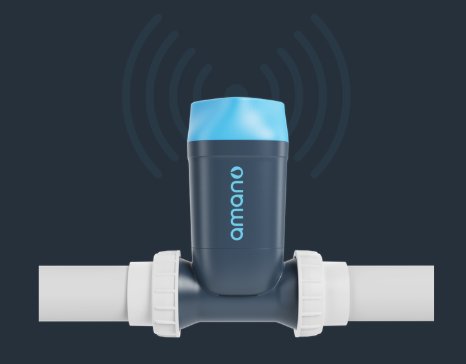
Amano builds the timestamped chemistry record that readiness audits ask for: scheduled reagent-based tests measuring free chlorine, combined chlorine, pH, and total alkalinity for commercial pools. Every result lands automatically with its time, alerts go out after completed tests, and logs can be shared by QR code without an Amano login.
For inspection readiness, the practical value is a chemistry record with no gaps to explain. Scheduled tests keep the four-parameter core documented with system timestamps and clear provenance, so the "show me your readings" part of an inspection becomes a share instead of a search. Completed tests across multiple properties are reviewable in one app, which lets a supervisor audit readiness without a site visit.
Amano supports the operator's process. It does not add chemicals, and it does not replace testing, verification, inspection, or recordkeeping duties imposed by the local authority having jurisdiction.
See the timestamped chemistry history
See how scheduled reagent tests keep a gap-free, shareable chemistry record for every pool.
Quick FAQ
What is the main takeaway for inspection readiness?
Operate ready instead of preparing for inspection season. Complete daily records, closed corrective loops, and small issues fixed on discovery are what inspectors read as a well-run facility.
Do digital records satisfy every inspector?
Not automatically. Acceptance varies by jurisdiction, so verify with the authority having jurisdiction before replacing any required paper process. Well-kept digital records with clear provenance are strong evidence where accepted.
Does automation replace the pool operator?
No. Automation can add measurements, records, alerts, and history, but it cannot perform every physical inspection or satisfy every jurisdictional requirement by default. Required manual tests and inspections still belong to people.
How do I find out what my inspector will check?
Ask the local health department or authority having jurisdiction for their inspection form. It is usually public, it is the literal grading sheet, and mapping it to your routines is the highest-value hour in inspection readiness.
Talk through your pools with us
Thirty minutes, your properties, your water-testing setup. No obligation.
Primary sources and scope
Reviewed September 16, 2026. The sources below provide public-health and label context. Amano product details on this page come from current Amano materials.