Scope: This is general operating guidance. Follow your local health department and adopted code, facility SOP (standard operating procedure), chemical label, and equipment-manufacturer instructions.
Why Pools Disappear Inside Property Operations
In a property-management portfolio, the pool is one asset among hundreds: roofs, elevators, landscaping, parking lots, and a maintenance queue that never empties. Pool chemistry competes with all of it for attention, and it usually loses until the water turns cloudy or a resident complains.
The disappearance is structural, not personal. Onsite teams are generalists with forty other duties, regional managers are twenty miles away, and owners see the pool only in budget lines and complaint emails. Monitoring works when it respects that structure instead of asking everyone to become a water chemist.
The financial version of the disappearance is worse: the pool that gets no attention does not just risk water quality, it accumulates deferred maintenance silently. Chemistry that runs out of range for weeks attacks heaters, plaster, and equipment at no visible cost until the invoices arrive. Visibility is cheaper than the alternative, and it is not close.
What Regional Managers Need
Regional managers need the portfolio answer, not the pool answer: which properties are fine, which need attention, and whether the last problem got resolved. That is an exception list with history, not a stack of per-property reports.
At portfolio scale, tiny inconsistencies become big operational noise. One property emails a spreadsheet, another texts a photo of a log sheet, and a third swears the reading was fine this morning. Standardized, timestamped readings from every property are what make the regional view possible at all. The operating model is covered in multi-pool monitoring. For the portfolio-wide picture of scheduled testing, alerts, and records, see our guide to commercial pool monitoring.
What Onsite Teams Need
Onsite staff need the opposite of a dashboard: a short daily routine and clear triggers. Review the overnight readings, walk the deck, respond to anything flagged, and get back to the other forty duties. Five minutes of review plus whatever the exceptions actually require.
The routine survives only if it is genuinely small. A process that asks a leasing-team-turned-pool-tech to interpret trend charts will be abandoned by the second week. Alerts that arrive with the parameter, the value, and the time are actionable; raw data feeds are homework.
What Owners Need
Owners need defensible answers to three questions: Is the amenity safe? Is it documented? And is the spend sensible? None of those require a chemistry degree, and all of them require a record.
The timestamped chemistry history is the asset here. When a resident dispute, an insurance question, or an inspection lands on the owner's desk, the record answers from evidence. Owners rarely ask for data until the day they need all of it at once, and monitoring is what makes that day boring.
Create Accountability Without Creating Surveillance
The trust calibration matters as much as the data. Monitoring should verify that onsite teams are supported and succeeding, not surveil them. The difference shows in what the system rewards: closed loops and fast responses, not perfect attendance at the testing schedule.
When the data shows a property struggling, the useful first question is what support that site needs: training, vendor help, staffing, or equipment. A monitoring program that leads with support gets honest data; one that leads with blame gets staged readings.
Use Shared Data to Improve Vendor Conversations
Many property-management companies run pools through outside service vendors, and the vendor relationship traditionally runs on trust and a monthly invoice. Shared timestamped readings convert that relationship into something reviewable.
Both sides reading the same chemistry history changes the conversation from "did anyone test this week" to "the trend says the Wednesday visit is not holding through Saturday." The vendor's work becomes visible in the same record the property keeps, and accountability stops being personal. The service-company side of this is covered in commercial pool monitoring for pool service companies.
Practical Operator Workflow
Assign the three roles their own small loops. Onsite: daily five-minute review plus exception response. Regional manager: weekly exception audit plus a monthly look at which properties repeat which problems. Ownership: a quarterly summary pulled from the same record, no special reporting project. One data source, three reading habits, and nobody's job description has to change.
Where Amano Fits
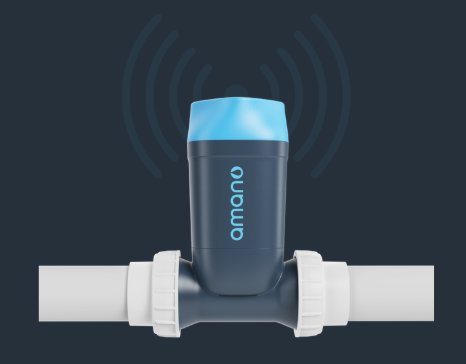
Amano runs scheduled reagent-based water tests for commercial pools, measuring free chlorine, combined chlorine, pH, and total alkalinity on a schedule the team sets. Results are timestamped, alerts go out after completed tests, logs can be shared by QR code without an Amano login, and completed tests across multiple properties are reviewable in one app.
For property-management companies, the practical value is one uniform chemistry layer across every community without adding tasks to onsite teams. Scheduled tests keep the record running between human touches, alerts route exceptions to whoever can act, and the shared history serves the tech, the regional manager, and the owner's records request from the same source. Built-in cellular reporting keeps equipment-room connectivity off the project's risk list.
Amano supports the operator's process. It does not add chemicals, and it does not replace testing, verification, or safety duties imposed by the local authority having jurisdiction.
See Amano for property management
See how scheduled reagent tests give every community a timestamped chemistry record without adding onsite tasks.
Quick FAQ
What is the main takeaway for property-management pool monitoring?
Give each role a small loop: onsite teams a daily routine, regional managers an exception list, owners a defensible record. One standardized data source serves all three.
Does automation replace onsite pool staff?
No. Automation adds measurements, records, alerts, and history. Physical inspection, correction, and jurisdiction-required manual tests stay with people.
How does monitoring change vendor management?
Shared timestamped readings make vendor work visible in the same record the property keeps. The conversation moves from trust-and-invoice to evidence-and-trend, which is better for both sides.
Will this create more work for onsite teams?
Done right, less. The system watches between visits and only asks for human time when something needs it. The failure mode to avoid is alert noise, so thresholds should map to real actions.
Talk through your pools with us
Thirty minutes, your properties, your water-testing setup. No obligation.
Primary sources and scope
Reviewed September 16, 2026. The sources below provide public-health and label context. Amano product details on this page come from current Amano materials.