Published by: Amano
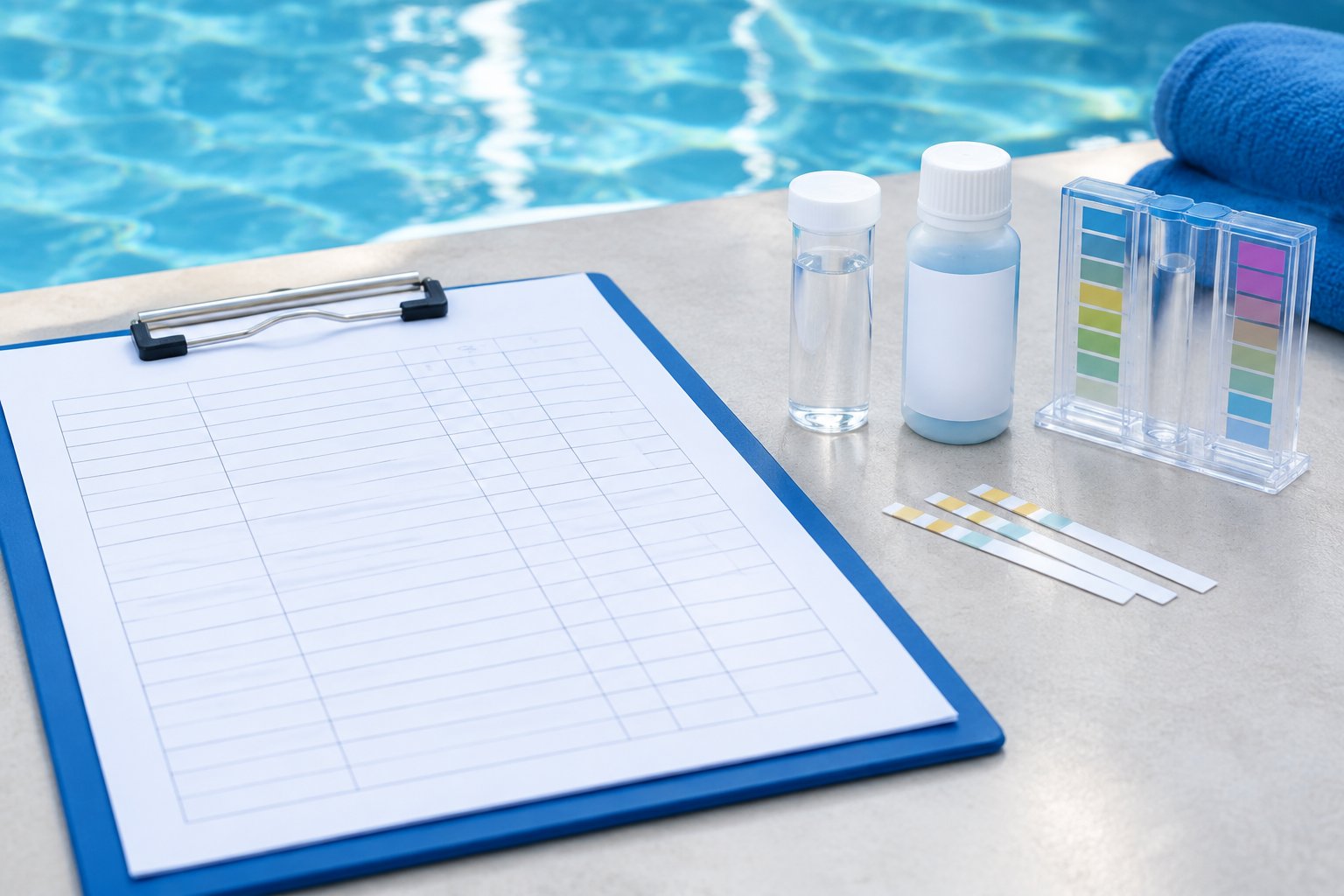
A pool testing log sheet is the written record that proves a pool was tested, when it was tested, and what staff did about the results. It should capture free chlorine, pH levels, sanitizer levels, water temperature, alkalinity, the initials of who tested, and any corrective action taken. A complete pool testing log sheet includes pool identification, the date and exact time of each test, the tester's initials, all required chemistry readings, and notes on maintenance or corrective steps taken when a result falls out of range.
Missing three days of readings during a health inspection is a common, avoidable failure. Health departments judge a facility by its paper trail as much as by its water clarity, and an incomplete log can turn a clean pool into a violation. Amano built its automated water-testing device around this exact problem, timestamping chemistry readings for commercial pools so operators always have a defensible record on hand.
Getting the log format right from the start saves rework later, whether you print a sheet for each pool or move to automated recordkeeping.
What Should a Pool Testing Log Record?
A pool testing log records five categories of information: pool identification, the date/time/initials of each test, the chemistry readings themselves, maintenance actions taken, and any incidents or follow-up notes. Skipping any one of these categories weakens the record's value to an inspector or a manager reviewing trends.
Pool Identification
Every entry needs to name the specific body of water tested. A property with a main pool, a wading pool, and a spa needs three distinct sets of entries, not one sheet labeled "pool" that leaves an inspector guessing which body of water was actually checked.
Test Date, Time, and Staff Initials
Record the exact date and time of the test, not just "morning" or "afternoon." Add the initials of the person who performed the test so the record shows who was accountable for that reading.
Chemistry Readings and Other Required Checks
Log free chlorine, combined chlorine, pH levels, total alkalinity, and water temperature at minimum. Many jurisdictions also require sanitizer levels for secondary disinfection systems, cyanuric acid, calcium hardness, and water clarity observations, so check your local code for the full required field list.
Maintenance Actions
Note chemical additions, backwashing, filter cleaning, and equipment adjustments alongside the readings that prompted them. A log entry showing "free chlorine 0.5 ppm, added sanitizer, retested 2.5 ppm" tells a complete story that a bare number never can.
Incidents, and Follow-Up Notes
Document closures, contamination events, equipment alarms, and the retest results that justified reopening. Incomplete incident notes are one of the most common reasons a log fails to satisfy an inspector, even when the underlying water quality was fine.
How Do You Use a Log Sheet During Daily Testing?
A log sheet works best when it is built into the testing routine itself, not treated as paperwork completed after the fact. Pool testing and pool maintenance both run more smoothly when the sheet, the test kit, and a pen sit in the same spot, ready before the first test of the day.
Set Up a Printable Sheet for Each Pool
Print a dedicated sheet for every distinct body of water and label it clearly at the top with the pool name and volume. Clip it near the test kit or pump room so staff never have to search for it before testing.
Record Manual Results and Actions as They Happen
Write results at the moment of testing, not from memory at the end of a shift. Backfilled entries are easy for an inspector to spot: handwriting, ink color, and rounded numbers that look too uniform across several days are a common giveaway.
Review Entries for Missing Tests and Changing Readings
A supervisor should check completed sheets regularly, not only before an inspection. Two consecutive readings drifting the same direction is a trend worth investigating at the source, whether that's a failing feeder, a bather-load spike, or a miscalibrated test kit.
How Should You Prepare Logs for Health Inspections?
Prepare logs for inspection by matching your recordkeeping to your local health code's required test frequency and fields, then keeping every sheet where an inspector can find it immediately. Local rules always control, and they vary by state, county, and facility type, so treat a generic template as a starting point rather than a finished compliance document.
Check Local Rules for Test Frequency and Required Fields
Many public pool codes require chemistry checks at least daily, often before opening and at additional intervals through the day, with spas frequently held to a stricter schedule because warm water and smaller volume change chemistry faster. Confirm your county or city health department's specific required fields, since a sheet built for one jurisdiction may be missing a value another requires.
Keep Pool and Spa Records Easy to Identify and Retrieve
A spa daily log sheet needs the same identification discipline as a pool log: clear labeling, dedicated rows, and a storage location staff and inspectors can both reach. Most jurisdictions expect logs retained for one to three years, with longer retention advisable after any chemical incident or reported water-quality issue. A binder left in an off-site office or a phone app only one former employee can open defeats the purpose of keeping records at all.
How Can Amano Reduce Manual Chemistry Logging?
Amano reduces manual chemistry logging by automatically testing and recording free chlorine, combined chlorine, pH, and total alkalinity on an inline device connected to your pool's return line. The system typically runs these tests twice daily, with adjustable timing and frequency, and stores every result as a timestamped chemistry log without a staff member writing a number on a sheet.
Automatically Record Timestamped Chemistry Readings
Each scheduled test produces a stored, timestamped entry, removing the manual transcription step where a reading gets written on paper, then typed into a spreadsheet, then re-entered into a report. Built-in cellular connectivity sends readings without requiring Wi-Fi setup, and that connectivity is included in the subscription.
Review Alerts and Multiple Pools in One Dashboard
The system notifies a team when a reading falls outside its configured range after each scheduled test. One app dashboard shows readings, alerts, and logs across multiple pools and properties, so a regional review that used to take an afternoon of phone calls takes minutes.
Share Logs by QR Code While Maintaining Required Manual Records
Chemistry logs can be shared with inspectors or partners through a QR code, with no login required on their end. Amano is a monitoring and recordkeeping aid, not a chemical-dosing system, and it does not replace required manual testing, inspections, local-code obligations, or operator judgment.
Choose a Logging Process Your Team Can Maintain
The best pool testing log sheet is the one your team completes accurately every single shift, whether that's a printed sheet clipped by the pump or an automated system logging readings in the background. Consistency beats sophistication: a simple paper sheet filled out correctly at test time outperforms an elaborate digital system nobody updates.
Match your fields to your local code first, then build the habit around opening, mid-shift, and closing routines so testing never becomes an afterthought. For multi-property operators, an automated system like Amano's can remove the manual logging step entirely while still leaving room for the manual tests and operator judgment your local authority requires.
If you manage several pools or want to see how automated timestamped logging fits your current process, a 30-minute walkthrough call can cover your properties and pricing directly.
Frequently Asked Questions
Where can I get a free printable pool testing log sheet?
Several printable pool log templates are available as free PDF or Excel downloads, typically covering a set number of weeks per page with columns for date, chemistry readings, and notes. Check that any template you download matches your local health code's required fields before relying on it for inspections.
What should a pool chemical log sheet include?
A pool chemical log sheet should include pool identification, exact test date and time, staff initials, free chlorine, combined chlorine, pH, total alkalinity, water temperature, and space to note corrective actions. Many facilities also track cyanuric acid, calcium hardness, and water clarity depending on local requirements.
How often should commercial pool test results be logged?
Most public pool codes require logging at least once daily, often before opening and at additional intervals during operating hours, with spas frequently requiring more frequent checks. Confirm the exact frequency with your state, county, or city health department, since requirements vary by jurisdiction and facility type.
Can a spa use the same log sheet as a pool?
A spa can use a similarly structured log sheet, but it needs its own dedicated entries clearly labeled as spa readings, separate from the main pool. Spas often require additional testing frequency and different ideal ranges for chlorine and temperature, so a shared, unlabeled sheet risks confusing which body of water was tested.
Can automated readings replace manual pool testing records?
Automated readings do not replace required manual testing, inspections, or the records your local health code mandates. Amano's system records timestamped chemistry readings automatically and reduces manual logging work, but it functions as a monitoring and recordkeeping aid alongside the manual tests, site procedures, and operator judgment your jurisdiction still requires.
Back to the learning library · Pool problems and operating guides