Scope: This is general operating guidance. Follow your local health department and adopted code, facility SOP (standard operating procedure), chemical label, and equipment-manufacturer instructions.
Commercial pool monitoring is the process of regularly measuring, recording, and responding to changes in swimming pool water chemistry and operating conditions. Modern commercial pool monitoring systems can help operators track water chemistry between service visits, identify problems earlier, maintain digital records, and oversee multiple pools from a central location.
For commercial pools, maintaining proper water chemistry isn't simply about keeping the water looking good. It's an ongoing operational responsibility.
Hotels, apartments, HOAs, resorts, municipalities, aquatic facilities, and other commercial properties may have hundreds or thousands of swimmers entering their pools throughout the season.
Every swimmer changes the water. So do sunlight, temperature, rain, chemicals, filtration, circulation, and the operation of the pool equipment itself.
The result is simple: Pool chemistry doesn't stand still.
That's why commercial pool monitoring matters.
This guide explains what commercial pool monitoring is, what should be monitored, how automated pool monitoring works, the differences between probes and reagent-based testing, the role of ORP, digital pool logs, remote monitoring, and what operators should consider when choosing a commercial pool monitoring system.
What Is Commercial Pool Monitoring?
Commercial pool monitoring is the process of repeatedly checking the condition of a commercial swimming pool so operators can identify and correct problems.
At its most basic level, this involves testing the water.
Traditionally, someone physically visits the pool, takes a water sample, performs chemical tests, records the results, and makes any necessary adjustments.
Technology has added another option: automated commercial pool monitoring.
Depending on the system, automated monitoring can collect information about the pool without requiring someone to be standing at the water every time a reading is taken.
Systems may monitor or test parameters such as free chlorine, pH, ORP, combined chlorine, total alkalinity, temperature, flow, and other equipment or water conditions.
The exact measurements depend heavily on the technology being used. And that distinction matters.
Not every pool monitoring system measures the same thing - or measures it in the same way.
Why Is Commercial Pool Monitoring Important?
Commercial pools can change quickly.
A water sample taken in the morning tells an operator what the water looked like at that moment. It doesn't necessarily tell them what happened later that afternoon.
Consider a hotel pool. At 8:00 AM, everything may be within the desired range. Then dozens of guests use the pool.
Swimmers introduce sweat, oils, dirt, organic material, and other contaminants. Sunlight may affect an outdoor pool. Chemical feeders continue operating. Water is added or lost. pH can move. Chlorine is consumed.
By evening, the chemistry may look very different.
CDC notes that contaminants introduced by swimmers and environmental conditions can reduce chlorine concentrations, which is one reason chlorine and pH need to be tested regularly.
Commercial pool monitoring attempts to reduce the blind spots between individual manual tests.
What Should Be Monitored in a Commercial Pool?
There isn't one measurement that tells an operator everything about pool water. Understanding the condition of the water requires looking at multiple parameters.
Four particularly useful measurements are free chlorine, combined chlorine, pH, and total alkalinity.
Free Chlorine
Free chlorine is chlorine available in the water for disinfection. It is one of the most important measurements in pool operation because maintaining an adequate disinfectant residual helps control pathogens.
If an operator wants to know the free chlorine concentration, the operator should understand whether the system directly measures free chlorine or measures another parameter associated with sanitizer activity.
Combined Chlorine
Combined chlorine is different from free chlorine.
When chlorine reacts with certain nitrogen-containing contaminants, chloramines can form. Measuring combined chlorine gives operators another piece of information about what is happening in the water.
That means knowing free chlorine alone doesn't provide the entire chlorine picture. A useful chemistry-monitoring strategy may therefore include Free Chlorine + Combined Chlorine rather than a single generalized chlorine indicator.
pH
pH affects swimmer comfort, equipment, water balance, and chlorine chemistry.
CDC notes that pH affects chlorine's ability to kill germs and recommends maintaining appropriate pH alongside disinfectant levels.
This makes pH one of the core parameters commercial pool operators need to understand. And because pH can change, knowing what it was yesterday isn't necessarily enough.
Monitoring creates a history. Instead of seeing pH = 7.6, an operator may be able to see 7.3 > 7.4 > 7.5 > 7.6.
The second tells a much more useful story. The pool isn't simply at 7.6. The pH is trending upward.
Total Alkalinity
Total alkalinity helps describe the water's ability to resist changes in pH.
It is an important part of overall water balance and can help operators understand why pH may be behaving the way it is.
Free chlorine tells you about available sanitizer concentration. pH tells you about acidity or basicity. Combined chlorine tells you something different about chlorine condition. Alkalinity provides additional information about water balance and pH stability.
The more complete the chemistry picture, the less an operator has to guess.
Manual Commercial Pool Water Testing
Manual testing remains fundamental to commercial pool operations.
An operator or technician takes a water sample and performs a test using an appropriate testing method. Depending on the parameter, that may involve liquid reagents, tablets, photometers, comparators, or other testing equipment.
Manual testing has an important advantage: someone is physically at the pool.
That person can observe water clarity, equipment condition, flow, leaks, unusual sounds, chemical supplies, deck conditions, and general facility condition.
For this reason, automated monitoring shouldn't be viewed as eliminating the need for people.
The more useful question is: What can automation tell those people before they arrive - and what can it tell them between visits?
For methods, frequency, and requirements, see our guide to commercial pool water testing.
The Problem With Point-in-Time Testing
Suppose a technician visits a pool at 9:00 AM. They test the water. Everything looks good. They record the results and leave.
The next technician arrives the following morning. There are now approximately 24 hours between those two observations.
If something changes at 2:00 PM, the operation may not discover it until much later unless another test is performed or some form of monitoring is in place.
This is the fundamental limitation of point-in-time testing.
A manual test tells you what the water was doing when the test was performed. Monitoring helps fill in more of the story.
What Is Automated Commercial Pool Monitoring?
Automated commercial pool monitoring uses equipment installed at or near the pool to collect water or equipment information automatically.
Depending on the technology, the system may take a measurement or water sample, analyze one or more parameters, send results to a cloud platform or dashboard, store the reading, compare it against configured ranges, and alert someone when the result is outside the desired range.
More advanced systems may also provide historical trends, multi-property dashboards, reports, dosing guidance, or integrations with other systems.
Not all automated monitoring systems work the same way. Two broad approaches are particularly important: probe-based monitoring and automatic reagent-based testing.
For a closer look at the testing side, see our guide to automatic pool water testing.
- Pool water
- Test or measure
- Send data
- Record results
- Identify out-of-range chemistry
- Alert operator
- Correct water
- Maintain history
Probe-Based Commercial Pool Monitoring
Probe-based systems use sensors exposed to the pool water or a sample stream. Common examples include pH probes, ORP probes, temperature sensors, and other electrochemical sensors.
The advantage of probes is that they can provide frequent or continuous measurements. But probes also introduce another operational requirement: the sensor itself has to remain trustworthy.
Sensors can require cleaning, calibration, verification, troubleshooting, and eventual replacement.
If the sensor becomes fouled or moves away from its calibration, the number displayed by the system may no longer accurately represent the water.
Automating a measurement doesn't eliminate the need to validate the measurement system.
What Is Probe Drift?
Probe drift occurs when the output of a sensor gradually moves away from its correct reference over time.
The sensor still produces a number. The problem is that the number may become less representative of the actual condition being measured.
This is why probe-based systems require calibration and verification.
Across dozens or hundreds of pools, this becomes a maintenance program. Someone needs to know which probes were calibrated, when they were calibrated, whether they were cleaned, whether the readings are believable, whether a probe needs replacement, and whether an unusual reading is caused by the water or the sensor.
Is the pool wrong - or is the probe wrong? See why pool probes drift for causes, symptoms, and what operators can do.
What Is ORP?
ORP stands for oxidation-reduction potential. It is commonly measured in millivolts and is widely used in commercial pool chemical-control systems.
ORP provides useful information about the oxidizing conditions in the water.
But ORP is not the same thing as free chlorine ppm.
ORP does not directly report how many parts per million of free chlorine are present in the water. Instead, it measures an electrochemical potential influenced by the chemistry of the water.
An ORP reading and a free-chlorine concentration answer different questions. For the full breakdown, see ORP vs. free chlorine, does ORP measure free chlorine?, and ORP vs. PPM.
ORP vs. Free Chlorine
Imagine an operator sees ORP: 720 mV. What is the free chlorine concentration?
The ORP number alone does not directly answer that question.
Conditions such as pH and other characteristics of the water can affect the relationship between sanitizer concentration and ORP.
That doesn't make ORP useless. ORP can be extremely useful for chemical-control applications. But operators should understand what it represents.
ORP measures oxidation-reduction potential. Free chlorine testing measures chlorine concentration. They are related. They are not interchangeable measurements.
Automatic Reagent-Based Pool Testing
Automatic reagent testing takes a different approach.
Rather than leaving a chemistry probehe sensor output, an automatic reagent system takes a water sample and performs a chemical test.
In concept, it automates what a pool technician already does: Take water > add reagent > allow the reaction to occur > measure the result > record it.
The system is testing the chemical parameter rather than relying on an immersed probe baseline for that measurement.
For commercial operators, automatic reagent testing can therefore provide another approach to remote pool monitoring.
Probes vs. Automatic Reagent Testing
The two technologies shouldn't simply be reduced to "good" and "bad." They solve the monitoring problem differently.
Probe systems can provide very frequent or continuous measurements and can be particularly useful as part of automated chemical-control systems. However, the probes require maintenance, calibration, verification, and eventual replacement.
Automatic reagent systems perform discrete chemical tests rather than continuously reading an immersed chemistry sensor. That means they may not provide second-by-second measurements, but they can directly test a broader chemistry panel without maintaining immersed chemistry probes for those tests.
The right question is not "Which technology is always better?" It is: "What information does my operation actually need, how often do I need it, and how much sensor maintenance do I want to manage?"
See probes vs. automatic reagent testing for a side-by-side look at how the two approaches fit commercial operations.
Probe-based monitoring
- Frequent or continuous measurements from immersed sensors
- Sensors require cleaning, calibration, verification, and eventual replacement
- Often part of automated chemical-control systems
Automatic reagent testing
- Discrete chemical tests on water samples
- Tests a broader chemistry panel without immersed chemistry probes for those tests
- Reagent supply is a consumable that requires periodic replacement
Monitoring vs. Testing
Monitoring means repeatedly observing the condition of something. Testing means performing a measurement to determine a specific value.
A probe can continuously monitor a property of the water. A reagent system can automatically perform discrete chemistry tests.
For a commercial pool operation, the ideal outcome isn't simply more data. It is useful measurements at useful intervals that lead to useful action.
What Happens When Commercial Pool Chemistry Goes Out of Range?
This is where monitoring becomes operationally valuable.
Imagine a regional manager receives an alert: Pool 14: Free Chlorine Low.
That's useful. But the next questions are: How low? What caused it? Who needs to respond? How much chemical should be added? Was it corrected? Is this happening repeatedly?
A good commercial pool monitoring strategy should help move the organization from Detection > Diagnosis > Correction > Documentation.
Alerts Are Only Useful If Someone Can Act on Them
More alerts aren't necessarily better.
Commercial property teams already deal with HVAC alerts, access-control alerts, fire systems, work orders, leak detection, equipment failures, and guest or resident requests.
Pool monitoring shouldn't simply create another stream of unexplained notifications.
An effective alert should answer as much as possible: What happened? Which pool? How far out of range is it? What needs attention? And ideally: What should we do next?
This is the difference between data and operational intelligence.
Why Historical Pool Chemistry Matters
A single reading tells you the current result. A history tells you the behavior of the pool.
Consider two pools that both read pH 7.8. Pool A's history is 7.8 > 7.8 > 7.8 > 7.8. Pool B's history is 7.2 > 7.4 > 7.6 > 7.8.
Those pools are not behaving the same way. Pool A appears stable. Pool B is trending upward.
Historical monitoring can reveal recurring chlorine loss, pH trends, repeated combined-chlorine events, changes associated with heavy bather loads, seasonal patterns, problems at certain times of day, and recurring chemical corrections.
This is where a pool monitor becomes more than an alarm. It becomes a source of operational history.
Commercial Pool Logs
Commercial pool operations often need records of water chemistry and facility operation. Exact requirements vary by jurisdiction.
CDC's Model Aquatic Health Code provides model guidance that jurisdictions can use when developing or updating aquatic facility codes, but state and local requirements ultimately govern individual facilities.
Historically, many facilities have used paper pool logs. Records can be incomplete, illegible, misplaced, difficult to share, difficult to audit, and difficult for regional management to access remotely.
Digital pool logs can reduce some of these problems.
What Is a Digital Pool Log?
A digital pool log stores pool chemistry and operational records electronically.
Depending on the system, a digital pool log may contain date, time, pool, free chlorine, combined chlorine, pH, alkalinity, temperature, operator information, notes, corrective actions, and historical readings.
When monitoring and logging are connected, the monitoring system can automatically record the measurements it takes.
Instead of Test > remember > write > file, the workflow becomes Test > automatically record.
Can Automated Pool Logs Replace Required Manual Logs?
Not necessarily.
Commercial pool requirements vary by state and local jurisdiction. Automated records should not automatically be assumed to satisfy every health-department requirement.
Operators should always follow the requirements of the authority having jurisdiction.
Automated logs can supplement those requirements and provide additional documentation, but technology doesn't override local pool code.
Remote Commercial Pool Monitoring
Remote monitoring becomes particularly valuable when the person responsible for the pool isn't standing next to it.
Consider a regional manager responsible for 40 apartment communities. Without remote visibility, that manager may depend on phone calls, text messages, paper logs, maintenance reports, vendor reports, and property visits.
They may know something is wrong only after someone tells them.
Remote commercial pool monitoring changes that model. Instead of asking "Did someone test the pool?" the manager can potentially see "Here's what the pool tested at."
Multi-Property Commercial Pool Monitoring
The value of monitoring tends to increase as the number of pools increases.
At scale, management needs to know which pools are in range, which need attention, which properties have recurring problems, where chlorine is repeatedly dropping, which pools have rising pH, where combined-chlorine problems are occurring, and which properties need service first.
The goal isn't to stare at 100 individual dashboards. The goal is exception management: show the team which pools need attention and let healthy pools remain in the background. The operating model behind that is covered in commercial pool management at scale.
Commercial Pool Monitoring for Apartments and Multifamily Properties
Apartment and multifamily operators face a particularly challenging monitoring environment.
The person responsible for the pool may also be responsible for HVAC, plumbing, electrical, grounds, apartments, work orders, and preventive maintenance.
Regional managers may be responsible for many properties and may rarely see the pools themselves.
That makes three capabilities especially valuable: remote visibility, automatic records, and clear corrective instructions.
The goal is to give the organization visibility without requiring the regional manager to become the person physically testing every pool.
For a deeper look at records in this setting, see apartment pool monitoring and compliance logs.
Commercial Pool Monitoring for Hotels and Resorts
Hotels have a different operational challenge. Pools and spas may experience rapidly changing bather loads.
Hotels may also have multiple shifts, engineering teams, outside pool-service companies, indoor pools, outdoor pools, spas, multiple bodies of water, and management teams that need oversight.
Monitoring provides another layer of information between manual tests and service visits. Historical data can also help management understand recurring problems rather than treating every chemistry event as an isolated incident.
For the hotel version of this workflow, see hotel pool monitoring and water-testing compliance.
Commercial Pool Monitoring for Pool Service Companies
Pool service companies face the same fundamental scaling problem. A technician cannot physically stand at every customer's pool all day.
The traditional model is Drive > test > adjust > leave. The pool continues changing after the truck leaves.
Remote monitoring can change the workflow to Monitor > identify > prioritize > arrive informed > correct.
That has the potential to make route operations more efficient because technicians can know more about the water before they arrive.
See how commercial pool monitoring for pool service companies fits a service route.
Wi-Fi vs. Cellular Pool Monitoring
Connectivity is an overlooked part of commercial pool monitoring. A monitoring system needs a way to transmit its data.
Wi-Fi is one option, but commercial pool equipment rooms aren't always ideal Wi-Fi environments. Potential issues include distance from the property's router, concrete walls, mechanical-room location, network changes, password changes, IT restrictions, guest networks, and property-network security requirements.
Cellular connectivity offers another approach. Instead of depending on the property's Wi-Fi network, the monitoring system communicates over a cellular connection.
For multi-property deployments, that can eliminate an entire installation variable: the property's network.
More on this in pool water testing without Wi-Fi.
What Should You Look for in a Commercial Pool Monitoring System?
There is no universal system that is right for every operation. Ask what it actually measures, how it measures those parameters, whether it requires calibration, what components need replacement, whether it measures free chlorine directly, whether it measures combined chlorine and alkalinity, whether it keeps a history, whether multiple people can see the data, whether it supports multiple properties, whether it helps operators understand what to do, and how it connects.
Look beyond the purchase price and understand the ongoing maintenance and operational model.
Where Amano Fits
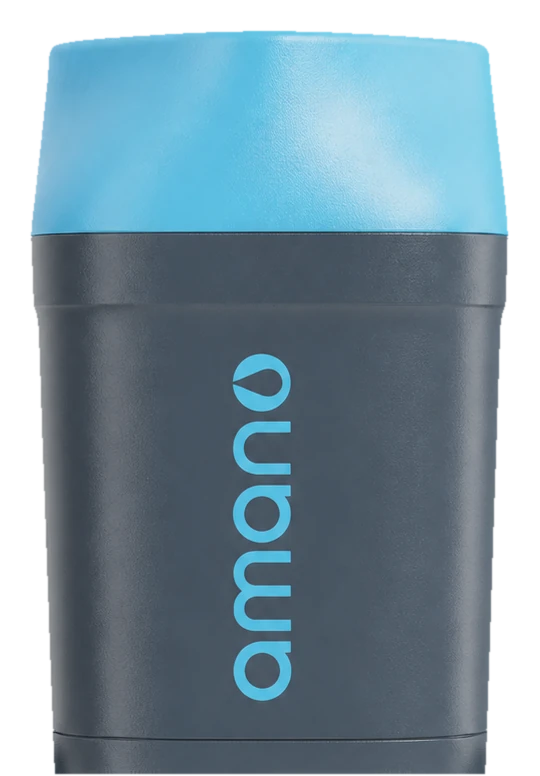
Amano approaches commercial pool monitoring through automatic reagent-based water testing rather than immersed chemistry probes.
Amano installs inline on commercial pool plumbing and automatically tests free chlorine, combined chlorine, pH, and total alkalinity.
The system performs scheduled reagent-based tests, with test timing and frequency configurable.
Because these chemistry measurements use liquid reagents rather than immersed chemistry probes, there are no chemistry probes requiring routine calibration or eventual probe replacement for those tests. The reagent cartridge itself is a consumable and requires periodic replacement.
Amano also automatically timestamps and stores the readings it takes, creating a digital chemistry history that can be viewed and shared across an organization.
When a reading falls outside the configured range, Amano can alert the team and provide guidance based on the pool's characteristics. A qualified person still verifies the result and decides on the response.
Amano uses built-in cellular connectivity rather than requiring the property to provide Wi-Fi.
The result is a different model of commercial pool monitoring:
Automatically test the water.
Record the result.
Identify the problem.
Help the team respond.
Keep the history.
See it on your pools
See how scheduled reagent testing, post-test alerts, and timestamped logs fit your properties.
Does Commercial Pool Monitoring Replace a Pool Operator?
No.
Technology doesn't inspect the deck. It doesn't hear a failing pump. It doesn't see a leaking pipe. It doesn't replace every requirement of a certified operator, service technician, health inspection, or local code.
The better way to think about monitoring is: Give the people responsible for the pool better information between physical inspections and service visits.
Technology handles information. People make decisions and maintain the facility.
Does Automated Pool Monitoring Replace Manual Water Testing?
Operators should not assume that it does.
The answer depends on applicable state and local regulations, the technology being used, and the requirements of the authority having jurisdiction.
CDC's Model Aquatic Health Code is guidance that jurisdictions may use when developing aquatic-facility regulations; it isn't a single federal operating code that automatically replaces state or local requirements.
Automated monitoring should therefore be viewed as an additional layer of visibility unless the applicable authority specifically recognizes it for another purpose.
Commercial Pool Monitoring FAQ
What is commercial pool monitoring?
Commercial pool monitoring is the process of repeatedly measuring and tracking swimming pool conditions so operators can identify changes, respond to problems, maintain records, and understand what is happening between physical service visits.
What is the best way to monitor commercial pool water chemistry?
The appropriate method depends on the operation. Manual testing provides direct on-site observation. Probe systems can provide frequent or continuous measurements. Automatic reagent systems can perform discrete chemical tests without relying on immersed chemistry probes for those measurements.
What chemicals should a commercial pool monitor?
Free chlorine and pH are fundamental measurements. Depending on the operation and applicable code, combined chlorine, total alkalinity, temperature, and other parameters may also need to be measured periodically.
Is ORP the same as chlorine?
No. ORP measures oxidation-reduction potential in millivolts. Free chlorine testing measures a chlorine concentration, generally expressed in ppm or mg/L. Chlorine affects ORP, but the measurements are not interchangeable.
Do pool monitoring probes need calibration?
Electrochemical probes generally require maintenance and calibration according to the manufacturer's instructions.
What is automatic reagent testing?
Automatic reagent testing uses a water sample and chemical reagents to perform a water-chemistry test automatically.
Can commercial pool monitoring work without Wi-Fi?
Yes. Connectivity depends on the product. Amano uses built-in cellular connectivity and does not require property Wi-Fi.
Can commercial pool monitoring create a pool log automatically?
Some systems can automatically store the readings they collect. Amano timestamps and records its automated reagent-test results and makes the chemistry history available digitally. Automated records do not automatically replace records required by local code.
Can I monitor multiple commercial pools remotely?
Some platforms provide multi-pool or multi-property dashboards. Amano allows an organization to view information from multiple properties remotely.
The Future of Commercial Pool Monitoring
Commercial pool monitoring is moving beyond simply putting a sensor in the water.
The larger opportunity is connecting Testing, Monitoring, Alerts, Corrective Action, Documentation, and Multi-Property Visibility into one operational workflow.
For a single pool, that means understanding what's happening between service visits. For a regional manager, it means seeing which properties need attention without calling every property. For a pool service company, it means knowing more about the water before the truck arrives. For an owner or operator, it means building a history rather than relying entirely on isolated measurements.
Know what's happening in the water before it becomes a bigger problem.
The future of commercial pool monitoring isn't simply more data. It's better information, better records, and faster action.
Talk through your pools with us
Thirty minutes, your properties, your monitoring setup. No obligation.
Primary sources and scope
Reviewed September 16, 2026. The sources below provide public-health and label context. Amano product details on this page come from current Amano materials.